
Dormant pruning in winter: which trees and shrubs to tackle now, and how formative cuts shape young stock for years
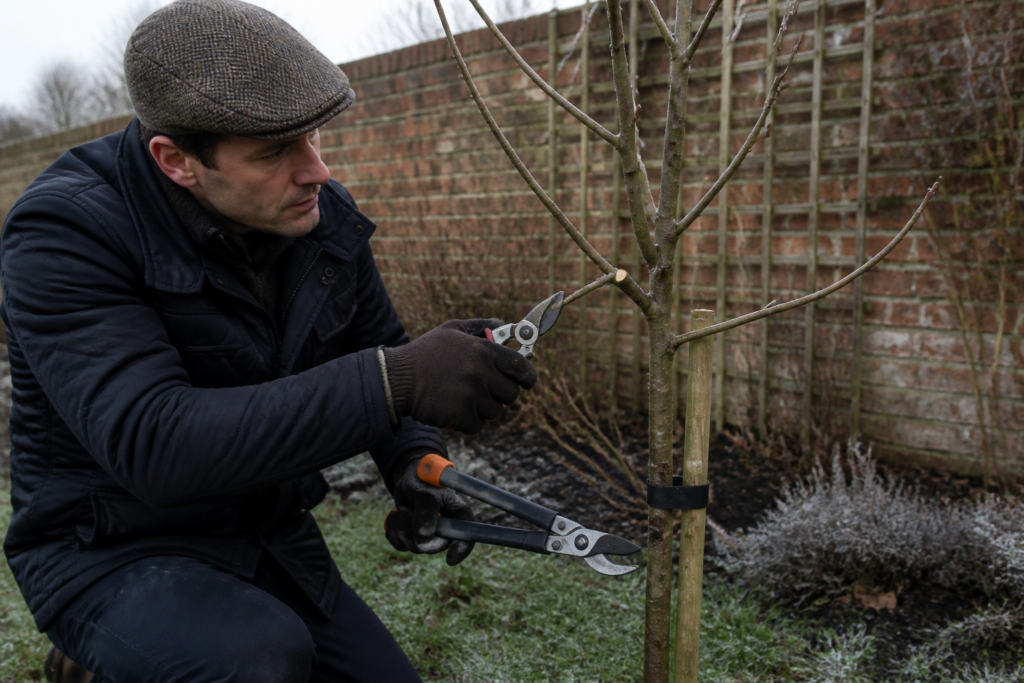
Winter strips the guesswork out of tree pruning. Without foliage, you can read the branch architecture, spot the crossing stems and see where young stock has already started making structural decisions you will regret in five years. For most deciduous trees and shrubs, the dormant period between leaf fall and bud burst is the best time to act.
Why dormancy suits most pruning
During dormancy, trees are not actively moving water and nutrients through their stems. Wounds lose very little sap, pathogen pressure drops for most species, and the tree has time to begin compartmentalising the cut before spring growth kicks in. There is a practical benefit too: once the canopy is bare, you can actually read the branch structure.
For young trees, this matters particularly. The formative cuts made in the first five to ten years determine branch angles, leader strength and the canopy shape a tree carries for the rest of its life. Get them right in these early winters and the tree largely holds its form from there.
Species to tackle now
Apples and pears are the standard winter job. Start by removing dead, diseased or crossing wood, then work on the framework: central leader, open vase or trained horizontal tiers. On young trees this is genuinely formative; on established ones, winter is when you manage spurs and open the canopy to light.
Wisteria also gets a winter cut. After shortening the long laterals in July or August, cut those same shoots back again in January or February to two or three buds from the main framework. That second cut is what builds the short flowering spurs close to the branch.
Hazel, lime and willow on a coppice or pollard rotation suit winter work well. You are cutting to established growth points, and finishing before late February keeps you clear of nesting season restrictions under the Wildlife and Countryside Act 1981. Dogwoods (Cornus alba and cultivars) grown for stem colour should be cut back hard to near ground level in late February. The brightest red or yellow stems are always the youngest growth; the older ones go dull.
Formative cuts: what to focus on
On young trees, a couple of clear decisions each winter will do more good than one heavy cut later. Identify and protect the leader, remove anything competing directly with it, and cut out crossing branches before the wood thickens and the point of contact becomes a structural weakness. Avoid short stubs: they die back, open the door to decay and are harder to seal than a clean cut made just outside the branch collar.
Use bypass secateurs for stems up to about 25 mm and a pruning saw for anything larger. The RHS does not recommend wound sealants for most species. A clean cut in the right place lets the tree compartmentalise the wound on its own terms.
Species to leave until summer
Cherries, plums, damsons and other Prunus should not be pruned during dormancy. They are highly susceptible to silver leaf disease (Chondrostereum purpureum) and bacterial canker when wounds are made in winter. The RHS advises pruning Prunus in dry conditions during July and August, when the tree’s natural defences are most active.
Spring-flowering shrubs are another group to leave alone now. Forsythia, philadelphus and weigela flower on last year’s wood, so winter pruning removes this season’s buds. Wait until the flowers have finished in spring, then cut back the flowered stems to where new growth is forming.
Working in the right conditions
For most species, December through early February works well. Avoid cutting during a hard frost, when wood is brittle and cuts will be rough. Stay off waterlogged soil near root zones where you can. One careful, focused session in the right conditions is worth considerably more than several hurried ones.
Frequently asked questions
Can I prune my cherry or plum tree in winter?
No. Prunus species (cherries, plums, damsons) are highly susceptible to silver leaf disease and bacterial canker when pruned during dormancy. The RHS advises waiting for dry conditions in July or August, when the tree's natural defences are most active.
What is formative pruning and when should I do it?
Formative pruning shapes the structure of a young tree or shrub in its first few years. For most deciduous species, winter is the right time: you can see the branch architecture without foliage, and the tree seals wounds before spring growth begins. Focus on establishing a clear leader and removing crossing or competing branches.
Should I use wound sealant after winter pruning?
Not usually. The RHS does not recommend wound sealants for most species. A clean cut made just outside the branch collar allows the tree to compartmentalise the wound naturally. Sealants can slow this process and trap moisture.
When is it too late to do dormant pruning?
Aim to finish most dormant pruning before bud burst, typically by late February for earlier species. Once growth starts, wounds seal more slowly and you risk removing developing shoots. If the buds are already opening, wait and assess the tree in summer.
Which spring-flowering shrubs should I avoid pruning in winter?
Shrubs that flower on last year's wood should be left alone until after flowering. This includes forsythia, philadelphus (mock orange) and weigela. Pruning in winter removes this season's flower buds. Cut back the flowered stems in spring once blooming has finished.