
Plant hedging and shrubs this spring while the soil is still moist and roots can move
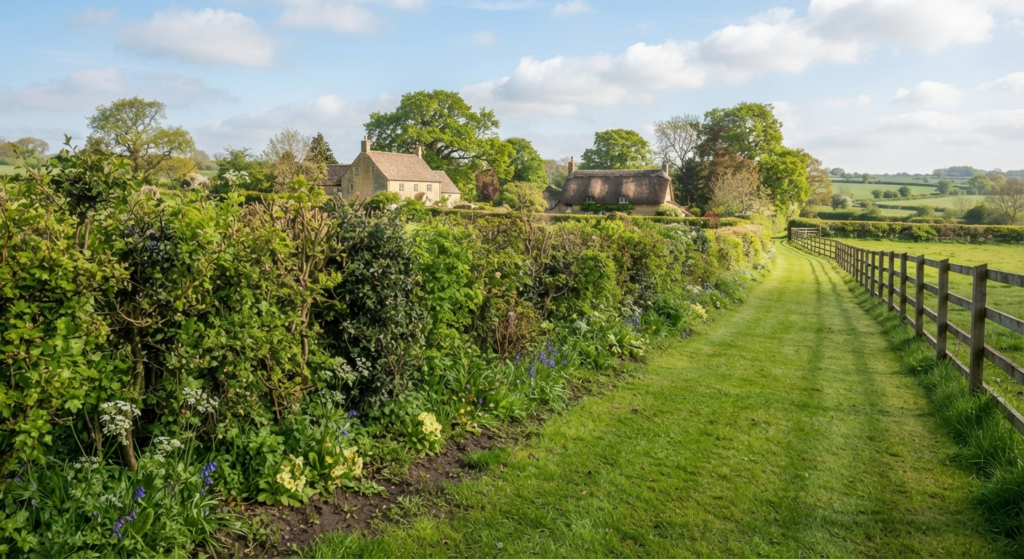
April soil in most of England and Wales sits between 8°C and 12°C at root depth. That is warm enough for new roots to start exploring the ground around them, and most soils still carry good moisture from winter and early spring rain. Both conditions work in your favour now. By June, well-drained ground can be surprisingly dry and newly planted stock faces a much harder task.
Root-balled stock: the window is closing
Root-balled plants, including field-grown hawthorn, blackthorn, beech, hornbeam and field maple, are lifted during the dormant season between November and March. By April most suppliers are down to their last stock, and what remains may have been in storage for weeks. If you have root-balled hedging still to go in, prioritise it now. Do not leave it sitting in a dry shed; plant as soon as it arrives or move it somewhere sheltered and keep the root ball moist.
Container-grown shrubs and hedging have more flexibility. Because the roots have never left their pot, the plant can go in at any point the ground is workable and not waterlogged. Spring planting into warm, moist soil gives container stock the best possible start before summer arrives.
Getting the planting right
Dig the hole to the same depth as the root ball but twice as wide. This is standard RHS guidance and the reason is practical: new root growth moves outward more than downward, so loosening the soil to the sides of the hole matters more than digging deep. For a run of hedging, a planting trench is faster and causes less disturbance than individual holes.
Before a container plant goes in, check the root ball is moist. If it is dry, sit the pot in a bucket of water for 20 to 30 minutes. Tease out any roots circling the base before planting, and set the plant so the root flare sits at or very slightly above the surrounding soil level. Planting too deep is one of the most common causes of failure in the first year.
Backfill with the excavated soil rather than a compost mix. Adding large amounts of organic matter to the hole can encourage roots to stay in the enriched zone rather than spreading into surrounding ground. A light surface dressing of a balanced general fertiliser, such as blood, fish and bone or Growmore, applied around the base after planting is more useful.
Aftercare in the first season
Watering is where most spring plantings succeed or fail. A new shrub or hedge plant has a limited root zone and cannot draw moisture from a wide area yet. Even after a wet April, a fortnight of dry weather in May or June is enough to set plants back significantly.
Water thoroughly at planting so the root ball and surrounding soil are properly soaked, not just damp at the surface. After that, check the top 10 cm of soil weekly. If it is dry at that depth, water again. In a dry spell this may mean watering every few days through June and July.
Mulch immediately after planting: 5 to 8 cm of bark chip, wood chip or composted material laid around the base and kept clear of the stem. This slows moisture loss from the soil surface and cuts down weed competition while the plant settles. On open or exposed sites, a windbreak net reduces stress from desiccating winds before the roots are properly anchored.
If rabbits are active on site, fit guards at planting. Retrofitting them after grazing damage has happened is more difficult and, in the case of young whips, too late to matter.
Spring planting is not second best
For container stock, spring is a genuinely good planting window, not a fallback. Soil conditions in April are often better for new root development than at any point in summer. The gap between stock planted now with decent aftercare and the same stock planted in late August can be a full growing season of root establishment.
Frequently asked questions
Can I plant hedging in April or is it too late?
Container-grown hedging can be planted through spring and summer as long as the soil is workable and you water consistently. Root-balled stock should be in by early April at the latest; most suppliers have limited stock remaining by then and may be down to cold-stored material.
How often should I water newly planted shrubs?
Check the soil to about 10 cm depth each week. If it is dry at that depth, water thoroughly rather than little and often. In dry spells during May and June this may mean watering every few days.
What is the difference between root-balled and container plants?
Root-balled plants are grown in open ground and lifted during dormancy with their root system wrapped in hessian or netting. They are only available from November to March. Container plants are grown in pots and available year round.
Should I add compost to the planting hole?
The RHS advises against filling the hole with rich organic matter, as roots may remain in the improved area rather than spreading outward into surrounding soil. Backfill with the excavated soil and apply a surface mulch or light fertiliser top-dressing instead.
How long does newly planted hedging take to establish?
Most common hedging species need two to three growing seasons to fully establish. Water regularly in years one and two and avoid hard formative pruning in the first growing season.