
How to choose a paddock and pasture grass seed mix
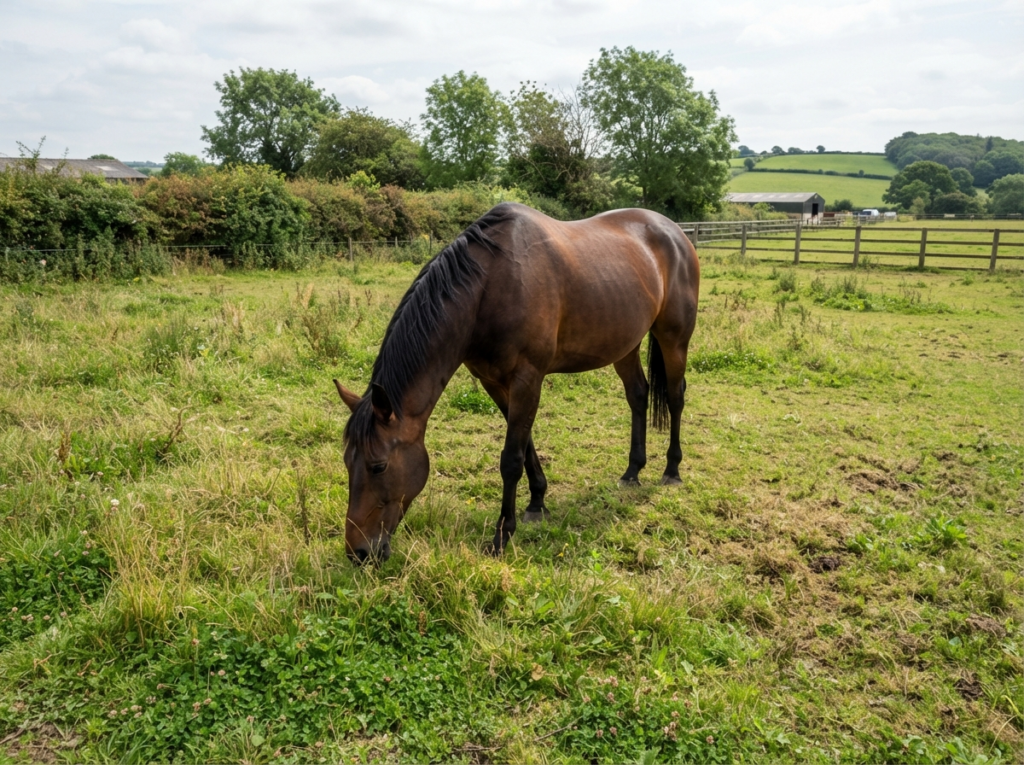
The right paddock mix depends on three things: what is actually grazing the ground, whether you are establishing new pasture or repairing worn ground, and how many years you need the ley to last. Answer those and the shortlist narrows fast.
What is grazing the paddock?
Horses and ponies are the one case where the wrong ryegrass matters beyond palatability: tetraploid ryegrass varieties can affect equine digestion, so mixes bred for horses leave it out. Pony Paddock Grass Seed Mix and Pony Paddock Mix Including Herbs are both built this way, the latter adding yarrow, ribgrass, chicory and sainfoin for extra minerals. Where laminitis is a risk, Natural Meadow and Laminitics Grass Seed Mix goes further, supplying vitamins and minerals through herbs rather than bulking out the sward with sugar-rich grasses.
For cattle, sheep or mixed grazing, tetraploid ryegrass is not a problem, and often an advantage: Dedicated Grazer Grass Seed Mixture leans on a high tetraploid content specifically to improve grazing quality and help white clover establish through the sward. If the paddock genuinely mixes horses with other stock, or you just want one reliable all-rounder, General Purpose Grazing Seed Mixture is described as suitable for all types of grazing including equine use.
New ley, renovation, or reclaiming poor ground?
Repairing a paddock churned up over winter, or worn bare at gateways and fence lines, is a different job to sowing a fresh ley. Pasture Renovator Mix is built for exactly that: a fast growing blend of hybrid and perennial ryegrass sown at 14kg per acre to fill bare patches quickly, whether that means the whole paddock or just the worst spots.
Reclaimed or genuinely poor ground is a different problem again, low fertility rather than worn turf, and Legume and Fertility Builder Grass Seed Mix is a pioneer crop for that situation. Clovers, lucerne, sainfoin and birdsfoot trefoil fix nitrogen as they establish, and the crop can later be worked in as a green manure to rebuild soil structure before a permanent ley goes in. Everything else in the range, Permanent Pasture, Dual Purpose, Dedicated Grazer, General Purpose and the pony paddock mixes, is for establishing pasture on ground that is not starting from a fertility or wear problem.
How long do you need the ley to last?
Permanent Pasture Grass Seed Mix is built for the long game: a minimum 8 to 10 year ley, with diploid perennial ryegrass giving a dense bottom to the sward and enough flexibility to cut hay or silage as well as graze. Dual Purpose Grass Seed Mix sits in the middle at 5 to 7 years, combining intermediate and late perennial ryegrasses with timothy and clover for mixed livestock needing both grazing and silage. Dedicated Grazer suits leys of 5 years or more, and General Purpose Grazing Seed Mixture stays productive in the sward for up to 5 years. If you do not yet know how long the ground needs to work, that is usually the question to settle before ordering, since it changes the mix as much as the livestock does.
Which mix for which job
- Permanent Pasture Grass Seed Mix: 8 to 10 year ley, mixed sheep and cattle enterprises.
- Dual Purpose Grass Seed Mix: 5 to 7 year ley, high sugar silage plus grazing, available without clover where broadleaf weed control follows establishment.
- Dedicated Grazer Grass Seed Mixture: high tetraploid grazing quality, leys of 5 years or more.
- General Purpose Grazing Seed Mixture: reliable all-rounder for mixed grazing including equine, up to 5 years.
- Pony Paddock Grass Seed Mix and Pony Paddock Mix Including Herbs: horses and ponies, no tetraploid ryegrass, sown at 14kg grass seed per acre.
- Natural Meadow and Laminitics Grass Seed Mix: horses and ponies at risk of laminitis, sown at 13.5kg per acre.
- Pasture Renovator Mix: repairing worn, overgrazed or churned ground, sown at 14kg per acre.
- Legume and Fertility Builder Grass Seed Mix: reclaimed land, low fertility ground, or overseeding thin areas.
- Gallops & Racecourses Grass Seed Mixture: exercise areas taking regular hoof traffic, also useful as an end-of-season renovator.
Two more things are worth knowing before you order. Mixed Herbs boosts the minerals available to livestock in any grazing mixture, sown at 1kg per acre, but it is only supplied alongside another paddock mixture rather than as a standalone bag, so add it to the same order. And if none of the standard blends quite fit the site, Create Your Own Seed Mix is a bespoke blending service for grass, wildflower meadow or a combination, matched to soil, aspect and brief.
Whatever mix goes down, a Grass Germination Sheet laid over freshly sown seed speeds up establishment and protects it from wind, birds and frost while it gets going, worth considering on an exposed site or late in the sowing window. For sowing rates against your acreage, or help choosing between mixes, the sales team can talk it through against your soil and stock.
Frequently asked questions
Can horses graze any of the standard grazing mixtures, or do they need a specific pony mix?
Horses can graze General Purpose Grazing Seed Mixture, since it is described as suitable for all types of grazing including equine use. For paddocks used only by horses and ponies, the dedicated pony mixes leave out tetraploid ryegrass varieties, which can affect equine digestion.
What is Mixed Herbs, and can I buy it on its own?
Mixed Herbs adds minerals and trace elements to any grazing mixture, sown at 1kg per acre. It is only available for delivery alongside another paddock mixture, so order it with your main seed rather than as a standalone product, and call the sales office if you need a price for it alone.
Can Phoenix blend a custom mix if none of the standard mixtures fit the site?
Yes. Create Your Own Seed Mix is a bespoke blending service covering grass, native wildflower meadow, or a combination, matched to your site's soil, aspect and brief, and it can be labelled for trade orders.