
Bare-root hedging: how to handle, heel in and space whips for a lasting hedge line
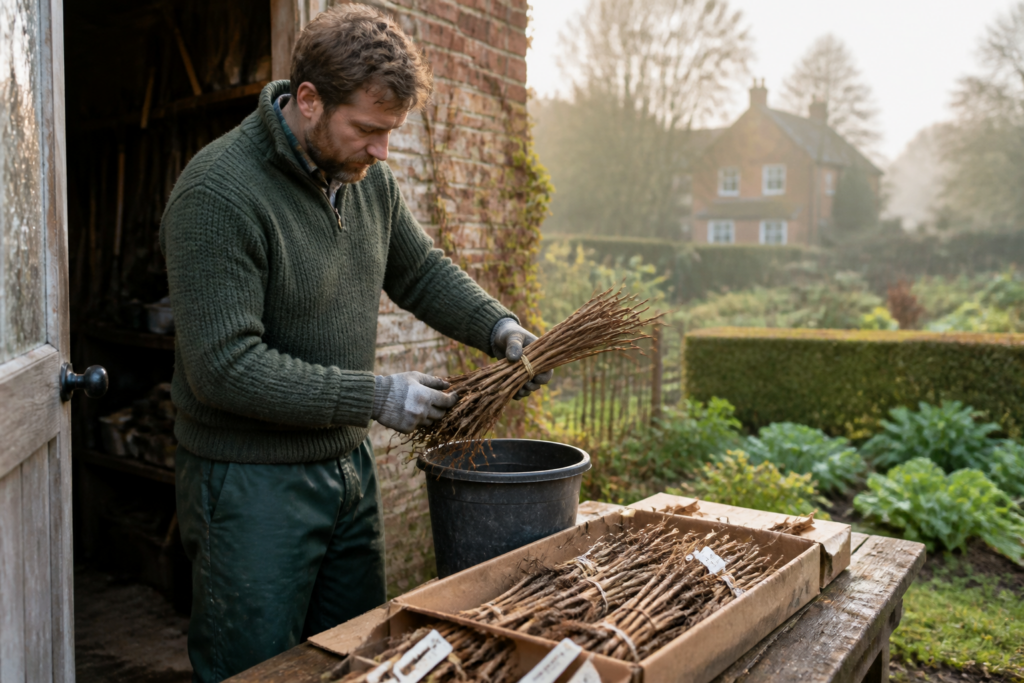
Bare-root season opens in October. Nurseries start lifting hedging whips from their field beds as the plants go dormant, and stock is available through to March. If you are planning a new hedge, or filling gaps in an existing one, this is the right time to act. Bare-root whips are substantially cheaper than pot-grown stock, but the roots come without any soil, which means they can dry out faster than you might expect. Get the handling right and bare-root plants establish reliably. Get it wrong and they often look fine until April, then fail.
What to do when the delivery arrives
Open the packaging straight away and check the roots. They should feel cool and slightly damp. If the parcel has been sitting in a warm van for most of the day, unwrap it immediately and look for signs of drying. Roots that feel dry or brittle need soaking in a bucket of water for no more than an hour before you plant or heel in.
If you are planting the same day, keep the roots wrapped in damp hessian or the original packing and store in a cool, shaded spot. A cold but frost-free shed or garage is fine. Do not leave bundles in direct sun or near a heat source.
Heeling in before planting
If the ground is not ready, or you have more plants than you can get in the ground in a day, heel them in. Dig a shallow V-shaped trench in a sheltered, shaded corner of the site. Lay the bundles at roughly 45 degrees, cover the roots with soil and firm it in lightly. Label each species clearly if you are working with a species mix. Heeled-in stock handled this way keeps well for two to three weeks.
The trench does not need to be deep. You are keeping the roots in contact with damp soil, not planting the final hedge. A common mistake is choosing a spot that drains very freely and dries out within a day. Pick somewhere with a bit of moisture retention, or water the trench lightly after filling.
Spacing the hedge line
Spacing depends on what you need the hedge to do. For a thick, stock-proof or wind-resistant native hedge, plant in a double staggered row: two parallel rows 35 to 40 cm apart, with plants 45 to 60 cm apart within each row and offset so each plant sits between the two plants opposite. This gives roughly three plants per metre of hedge line, and is the standard approach for native species like hawthorn, blackthorn and field maple.
A single row works where space is limited or where you want a lighter boundary. Space plants 30 to 45 cm apart. For a mixed species hedge, plant in clumps of three to five of the same type rather than alternating strictly one-by-one along the row. Clumps look more natural when the hedge fills out, and they tend to provide better habitat for invertebrates and nesting birds.
Planting the hedge
A continuous trench is more efficient than individual holes for a long run of hedging. Dig to the depth of the root system and set each whip so the soil mark on the stem (the slightly darker band near the base) sits at ground level. Backfill in stages and firm the soil with your heel as you go. Air pockets around the roots are the main reason bare-root plants fail to establish, so take the time to tread the soil in properly.
Mulch the planted row immediately with a 75 mm layer of bark or wood chip, leaving a hand’s width clear around each stem. If the site has any grazing pressure from rabbits or deer, fit spiral guards or mesh stakes at planting. A small whip in winter is easy to miss, and sourcing replacements in spring takes time.
The first growing season
Bare-root hedging planted before Christmas generally needs little attention through winter. On heavier soils, waterlogging is a bigger risk than drought, so check that the trench drains freely before you start. If water sits in the bottom for more than an hour after rain, sort the drainage first.
The period to watch is April through to the end of May. If spring is dry, water the new hedge thoroughly and keep the mulch topped up to hold moisture around the roots. A dry first spring can set a newly planted hedge back by a full growing season, even when the autumn planting went well.
Frequently asked questions
When can I buy bare-root hedging plants?
From approximately October to March, while plants are dormant. Earlier in the season you will have the best choice of species and sizes; popular native varieties like hawthorn and blackthorn can sell out by February.
How far apart should I space bare-root hedging whips?
For a thick, stock-proof native hedge, use a double staggered row with the two parallel rows 35 to 40 cm apart and plants 45 to 60 cm apart within each row. This gives roughly three plants per metre. For an informal single-row hedge, 30 to 45 cm between plants is adequate.
What is heeling in?
Heeling in means temporarily burying the roots of bare-root plants in a shallow trench to keep them alive until you are ready to plant in the final position. It stops the roots drying out and is not permanent planting.
Which native species work well for bare-root hedging?
Hawthorn, blackthorn, field maple, hazel and dog rose are all widely available as bare-root whips and suit most UK soils. Hawthorn is the most common choice for a stock-proof hedge. Hornbeam or beech suit a more formal garden hedge and both hold their dead leaves through winter.
Does bare-root hedging need watering after planting?
Not usually through winter. The main risk on heavier soils is waterlogging rather than drought. Watch April and May in the first year; if it is dry, water thoroughly and keep the mulch topped up around the stems.