
How to choose floating islands for a pond or lake
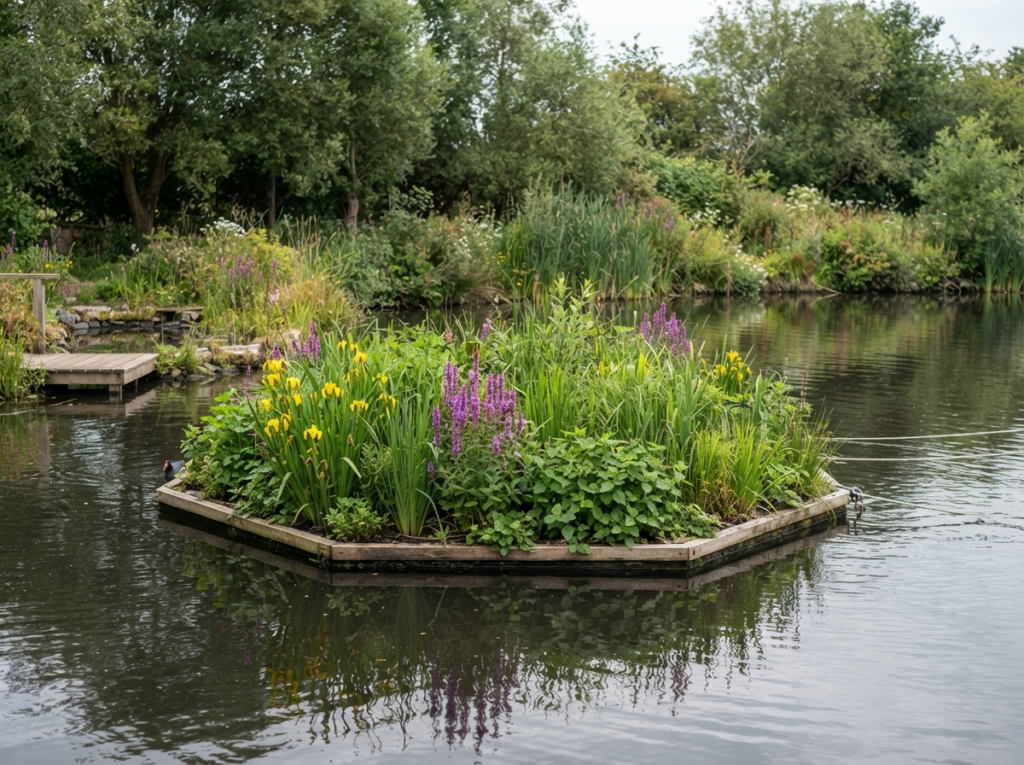
Since there is only one product in this category, Floating Islands is not really a comparison decision. It comes down to whether a planted floating platform suits what is going on in your water, and how many you need for the site.
Below the waterline, each island carries a permeable root mat where plant roots and micro-organisms take up nitrates, phosphates and other nutrients from the water. That can help reduce algal blooms and improve clarity over time, though it works alongside whatever else is feeding nutrients into the water rather than instead of it. Above the waterline, the planting becomes cover: waterfowl nest and forage in it, dragonflies and damselflies use it, amphibians and small mammals shelter in it, and fish spawn and shelter among the roots below.
What the water body is for shapes the case for using one
A garden pond usually wants an island for cover and a bit of planted interest at a scale a bare pond cannot manage on its own. A commercial or golf course lake more often wants the nutrient uptake too, plus the benefit of waterfowl using the water. Park ponds and public waterways tend to sit somewhere between the two. Attenuation basins and SuDS schemes are a different case: because the islands float, they cope with the fluctuating levels those schemes are designed around, and they can help dissipate wave energy at the bank, which matters where levels move or boats use the water and the bank is at risk of erosion. On wildlife reserves, conservation sites and fisheries, habitat is usually the main reason: spawning and shelter for fish, cover for amphibians, food and refuge for the wider pond community.
Sizing and planting is why this is a quote, not a checkout
How many islands a site needs, and what goes on them, depends on the water body itself: its surface area, exposure to wind and boat traffic, existing planting, and what the site owner most wants from it, whether that is clarity, wildlife, bank protection or a mix of the three. There is no single stock size that fits both a garden pond and a multi-hectare attenuation lake, so this runs as an enquiry rather than an add-to-basket purchase. Send over the water body’s dimensions, its use and what you are hoping to achieve, and sizing plus a native planting mix comes back as part of a quote.
What an island does not replace
An island is a habitat and water quality aid, not a fix for a badly designed pond or a water body carrying a heavy pollution load. If nutrients are arriving faster than a reasonable number of islands can take up, or the underlying issue is poor circulation or an ongoing pollution source, that needs sorting out in its own right; the islands support the water, they do not treat it on their own. Installation itself is straightforward, and once the planting has established, ongoing maintenance is minimal, though minimal still means an occasional check rather than no maintenance at all.
If that sounds like the right fit for your site, the next step is an enquiry: send the water body’s size, its use and any known problems, and sizing and planting options come back with a quote.
Frequently asked questions
How do I know how many islands I need and what to plant on them?
That depends on the water body itself, so it is handled as an enquiry rather than a fixed pack size. Send over the surface area, exposure and what you want the island to achieve, and sizing plus a native planting mix comes back as part of a quote.
Will a floating island fix algae or poor water quality on its own?
Not on its own. The root mat can help reduce nutrients and improve clarity over time, but that works alongside dealing with whatever else is feeding nutrients into the water. An island is not a guaranteed fix for a badly designed pond or a heavily polluted water body.
Are floating islands suitable for SuDS schemes and lakes with fluctuating water levels or boat traffic?
Yes. Because the islands float, they adjust with the water level rather than being fixed to a bank, and they can help dissipate wave energy at the bank, which reduces erosion pressure where levels move or boats are in regular use. Installation is straightforward and maintenance is minimal once the planting has established.