
How to store grass seed over winter so your spring germination rates hold up
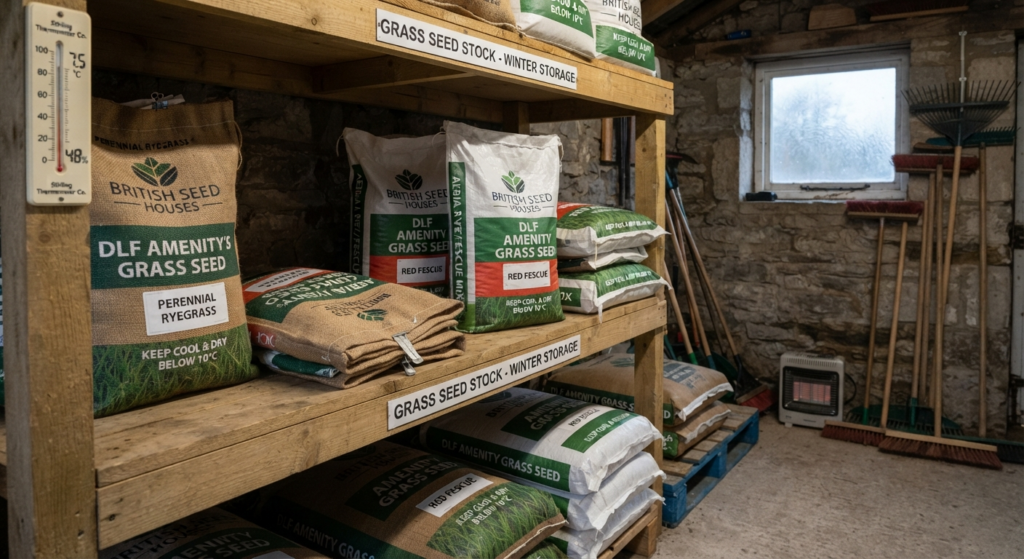
Many grounds teams head into January with part-used bags of grass seed in a shed or store. Some have pre-ordered stock for March. Left without much thought, both can lose 10 to 20 percent of their germination rate before spring sowing even starts. That matters whether you are overseeding a cricket square or repairing a park lawn after a heavy autumn of use.
The two things that kill viability in stored grass seed are moisture and warmth. Keep seed below 10°C and at relative humidity below 50 percent, and most amenity species hold their labelled germination rate for two years or more. That covers perennial ryegrass, red fescue, browntop bent and most common amenity mixes.
Why storage conditions matter more than you might expect
Grass seed is alive. It respires slowly, drawing on its own energy reserves while it waits to germinate. Warmth and moisture both accelerate that process. When seeds respire faster than they should, viability falls. When the moisture content inside the seed rises above roughly 10 percent by weight, fungal pathogens can take hold even inside a sealed bag.
What catches people out is not the general temperature of the store but the fluctuation. A shed that warms up during the day and cools sharply at night causes condensation inside partly-opened bags. That moisture migrates into the seed slowly, but it compounds across a whole winter.
Temperature and humidity targets
Cool and dry is the correct general principle, but specific numbers help. A well-established guide in seed storage research suggests the sum of storage temperature in Fahrenheit and relative humidity percentage should stay below 100. At 15°C (59°F), that means keeping humidity below 41 percent. At 5°C (41°F), you have more latitude, around 59 percent.
For most UK amenity stores, a cool outbuilding or unheated garage that stays between 5 and 12°C and stays dry does the job. A domestic fridge works well for small quantities if the seed is fully sealed. Central heating is the problem: a warm indoor store with typical house humidity of 50 to 60 percent is genuinely risky over several months.
If you have a hygrometer in the store, use it. Below 50 percent relative humidity is safe for most amenity species. Above 65 percent is a risk. Silica gel sachets in the container help buffer smaller quantities against fluctuations between dry and damp spells.
Container choice and avoiding condensation
Original sealed bags are fine if they have not been opened. Once opened, reseal properly. A clip or fold is not enough for winter storage. Double-bag in thick polythene and squeeze out excess air, or transfer to a sealed container with a tight-fitting lid.
Avoid storing open seed in hessian or thin paper bags. Both absorb moisture from the air. If the original bag has a moisture-barrier laminate layer, preserve it and do not puncture it until you are ready to sow.
Rotation: use older stock first
Pre-ordered seed for spring often arrives before you need it. Do not put it at the back of the shelf behind last autumn’s leftovers. Date every bag or container when it comes into store, even if the original label already carries a use-by date, because what matters is the conditions since you received it.
Labelled germination rates are measured at packing. The rate you see in the field in March depends on how the seed has been stored since then. A bag showing 90 percent germination on the label that has sat through a wet winter in a leaky outbuilding might perform at 70 percent by spring. At typical amenity sowing rates, that gap adds up quickly.
Testing viability before the season starts
If you have any doubt about a batch, run a simple germination test in late January or February. Place ten seeds on damp kitchen roll, fold it over, seal it in a bag at room temperature and check after seven to ten days. Count how many have sprouted and multiply by ten for a percentage figure. If it comes in more than 15 percentage points below the labelled rate, either adjust your sowing rate upward or replace the batch before you commit it to a site.
It takes ten minutes. On a site where the establishment window is short and re-sowing would cost you time you do not have, that test is worth doing now rather than in April.
Frequently asked questions
How long does grass seed last in storage?
Most amenity grass species, including perennial ryegrass and fescues, hold their labelled germination rate for two to three years if stored correctly: cool, dry and sealed. Poor conditions, particularly damp and temperature swings, reduce that considerably.
Is it safe to store grass seed in a garden shed over winter?
A shed is fine if it stays dry and avoids wide temperature swings that cause condensation. If humidity in the store regularly exceeds 65 percent, move the seed to a more stable environment. An unheated garage or outbuilding is often better.
How can I tell if grass seed is still viable?
Place ten seeds on damp kitchen roll in a sealed bag at room temperature and count germinations after seven to ten days. Multiply by ten for a percentage. If the result is more than 15 percentage points below the labelled rate, increase your sowing rate or replace the batch.
Should I store grass seed in a fridge?
A fridge is a good option for small quantities, provided the seed is fully sealed to prevent moisture pick-up. For larger commercial stocks, a cool, dry, frost-free outbuilding is more practical.
Does opening a seed bag affect how long it keeps?
Yes. Once a bag is opened, reseal it tightly or transfer the contents to an airtight container. Condensation inside a loosely folded bag is one of the most common causes of viability loss during winter storage.