
How to choose a residual herbicide
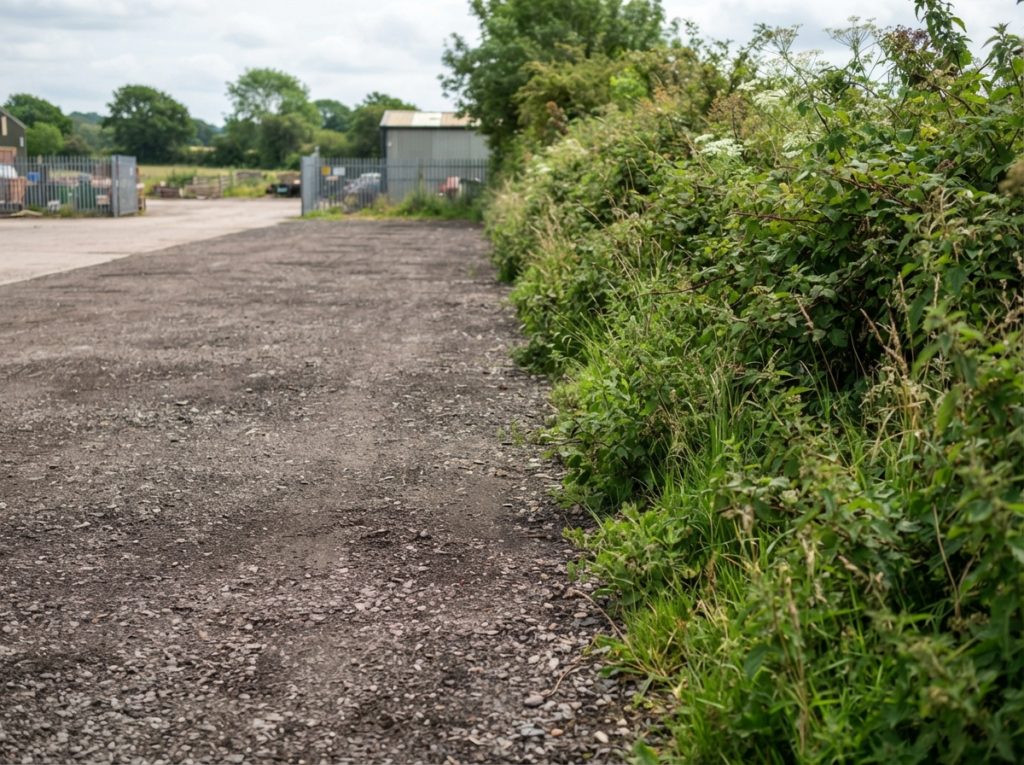
A residual herbicide works before weeds appear, not after. It sits in the top layer of soil and stops seeds germinating, which makes it the right tool for ground that needs to stay bare for months at a time: gravel drives, paths, kerb lines, railway ballast, fence lines. If your problem is weeds already growing tall and green, a residual on its own will not touch them. That job belongs to a total or selective herbicide instead.
Phoenix Amenity’s residual range currently comes down to one product in stock, Chikara Weed Killer, so the real decision is whether a residual is the right approach for your site, and then how to apply it correctly.
Prevention or clearance, or both
Chikara is formulated with 25% w/w flazasulfuron, giving pre-emergent control plus some early post-emergent action on weeds that have only just broken the surface. On its own it holds back most annual and perennial broadleaf and grass weeds, including buttercup, daisy, dandelion, nettle and shepherd’s purse, for up to five months from one application.
Where the ground already has established weeds such as creeping thistle, common ragwort or ribwort plantain, Chikara is designed to be tank-mixed with a glyphosate-based total herbicide. The glyphosate clears what is growing, the flazasulfuron stops the next flush germinating, and you get both jobs done on the same visit rather than two separate call-outs.
Where it is and is not suitable
Chikara is built for surfaces not intended to carry vegetation: hard standing, permeable surfaces over soil, and areas like gravel, ballast and kerb lines. It can also be used around the base of established trees and shrubs in amenity settings. It is not a lawn or turf product, and it should not go anywhere you want grass or planting to establish afterwards, since the whole point is that it stops things germinating.
Timing and rate
Apply in early to late spring, before weeds have germinated, for the strongest residual effect; autumn application is also possible. Avoid spraying in windy conditions or when weeds are stressed by drought or frost, and keep to one application per year. Boom sprayer rate is 150g per hectare in 200 to 600 litres of water; knapsack rate is around 7.5g per 10 litres, covering roughly 500m². Pack sizes and exact coverage are on the product page.
Facts and safety
Chikara is a professional-use product only, MAPP number 20185, with a LERAP Category B classification. It must be applied by trained operators in line with current UK plant protection product guidance. Always read and follow the product label and safety data sheet before use, and never apply from memory or guess a rate: check the current label each time, since approvals and rates can change.
Next step
If your site needs established growth cleared as well as months of prevention, Chikara’s own guidance points to tank-mixing with a glyphosate total herbicide such as Roundup ProActive 360. If you are not sure a residual is the right fit for your surface, our technical sales team can talk through the site before you order.
Frequently asked questions
Can I use Chikara on my lawn?
No. Chikara is a residual herbicide for surfaces not intended to carry vegetation, such as gravel, paths and hard standing. Using it on turf or borders where you want grass or plants to grow would stop them germinating too.
Does Chikara kill weeds that are already growing?
It has some early post-emergent effect on weeds that have only just started growing, but established weeds need a tank mix with a glyphosate-based total herbicide alongside it. Chikara alone is a prevention tool, not a clearance one.
Who is allowed to apply Chikara?
Chikara is for professional use only (MAPP 20185) and should be applied by trained operators following the current product label and UK plant protection product guidelines.