
Anthyllis vulneraria L.
Common Kidney-Vetch
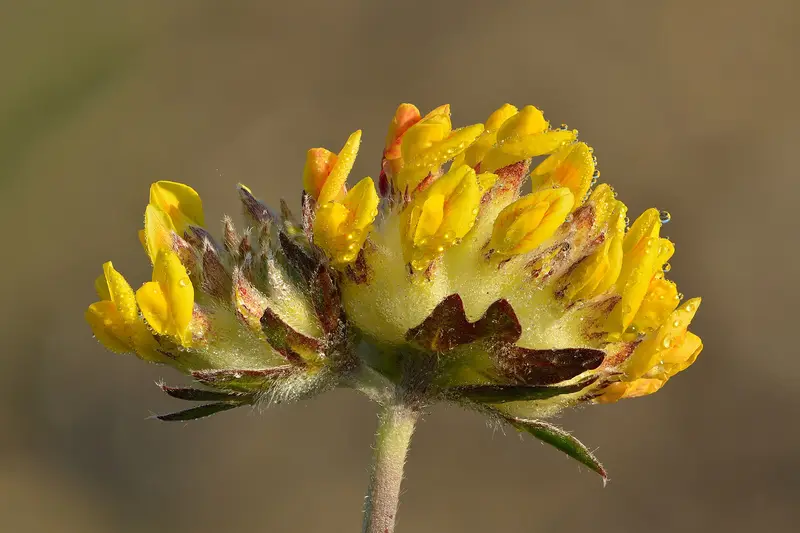
Kidney vetch is a native member of the pea family found on dry, sunny grassland, chalk and limestone downs, cliff tops, dunes and other open, nutrient-poor ground, often near the coast. It forms low rosettes and sprawling stems of soft, silky-haired pinnate leaves, and carries rounded, clover-like flower heads cushioned in a woolly calyx.
About
Kidney vetch is a native member of the pea family found on dry, sunny grassland, chalk and limestone downs, cliff tops, dunes and other open, nutrient-poor ground, often near the coast. It forms low rosettes and sprawling stems of soft, silky-haired pinnate leaves, and carries rounded, clover-like flower heads cushioned in a woolly calyx. The blooms are usually yellow but can be cream, orange or red, especially in coastal forms.
Flowering from late spring into summer, it is an important nectar source for bees and is the sole larval food plant of the small blue, Britain's tiniest butterfly, making it valuable for conservation plantings. As a legume it fixes nitrogen and copes with thin, free-draining, often calcareous soils. It is a key species in chalk-grassland, coastal and low-fertility wildflower meadow mixes, where it establishes well on poor ground that suits few other flowers.
Also known as
Common Kidneyvetch · Kidney Vetch · Kidney vetch · Lady's-fingers · Woundwort · kidney-vetch · ladies’ fingers · lady's fingers
Synonyms
Anthyllis affinis · Anthyllis biebersteiniana · Anthyllis coccinea pyrenaica · Anthyllis collina · Anthyllis dagestanica · Anthyllis dillenii · Anthyllis leguminosa · Anthyllis maritimas · Anthyllis polyphylla · Anthyllis pulchella · Anthyllis rosea
In our seed mixes
- BFS 11 – Coastal Meadow Grassland Seed Mix
- BFS 12 – Green Roof Wildflower Seed Mix
- BFS 120 – Wildlife Wildflower Seed Mix for Bees, Birds and Butterflies- 100% Flora
- BFS 130 – Flowering Grassless Lawn Wildflower Seed Mix – 100% Flora
- BFS11(F)- Coastal Meadow 100% Wildflower Meadow Mix
- BFS12(F) – Greenroof 100% Wildflower Seed Mix
Beta — under active development. This catalogue is still being built and accuracy-checked. The information here (including plant identifications, British native status, soil and sun/shade preferences) is provided in good faith for general guidance only and may contain errors or omissions. It must not be relied upon on its own — please confirm details with us before making planting, specification, foraging or purchasing decisions, and never eat or medicinally use any plant based on this catalogue alone, as some species are toxic. To the extent permitted by law, Phoenix Amenity Supplies accepts no liability for any loss arising from use of this information.