
Ranunculus repens L.
Creeping Buttercup
Creeping buttercup is a vigorous native perennial that spreads by long, leafy runners which root at the nodes to form dense, ground-covering patches. Its leaves are divided into three lobes, with the central lobe raised on its own short stalk and often marked with pale blotches.
About
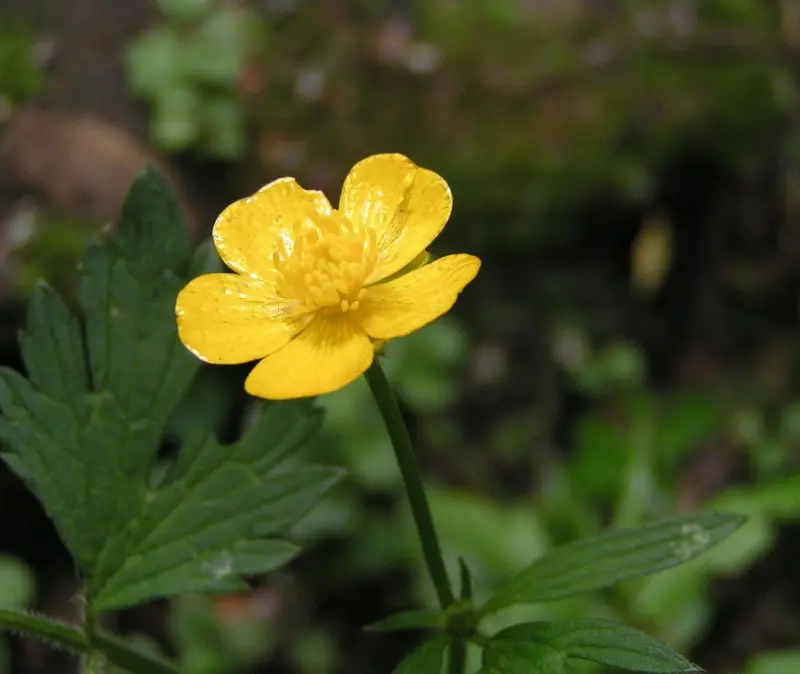
Creeping buttercup is a vigorous native perennial that spreads by long, leafy runners which root at the nodes to form dense, ground-covering patches. Its leaves are divided into three lobes, with the central lobe raised on its own short stalk and often marked with pale blotches. From late spring into summer it produces the classic glossy, five-petalled yellow buttercup flowers, held on grooved stems above the foliage.
It favours damp, heavy soils and tolerates compaction well, thriving in pastures, lawns, ditches, damp meadows and disturbed ground in sun or partial shade. Its open flowers are readily worked by bees and hoverflies. Because of its creeping habit it can become a persistent weed of gardens and wet grassland, so it is best appreciated in informal, damp wild areas rather than deliberately sown into fine meadow mixes. Like all buttercups the foliage is acrid and unpalatable to livestock.
Also known as
Creeping Crowfoot · Double-flowered Creeping Buttercup
Synonyms
Ranunculastrum repens · Ranunculastrum reptabundum · Ranunculus belvisii · Ranunculus caleyanus · Ranunculus clintonii · Ranunculus hortensis · Ranunculus infestus · Ranunculus intermedius · Ranunculus lagascanus · Ranunculus lanuginosus · Ranunculus lucidus · Ranunculus oenanthifolius
In our seed mixes
Beta — under active development. This catalogue is still being built and accuracy-checked. The information here (including plant identifications, British native status, soil and sun/shade preferences) is provided in good faith for general guidance only and may contain errors or omissions. It must not be relied upon on its own — please confirm details with us before making planting, specification, foraging or purchasing decisions, and never eat or medicinally use any plant based on this catalogue alone, as some species are toxic. To the extent permitted by law, Phoenix Amenity Supplies accepts no liability for any loss arising from use of this information.