
Ranunculus bulbosus L.
Blister Flower
Bulbous buttercup is a native perennial easily told from other buttercups by the swollen, corm-like base of its stem, which sits just below the soil surface and stores food over winter. It is generally shorter and more compact than the meadow buttercup, with deeply divided, three-lobed leaves and bright, glossy yellow flowers.
About
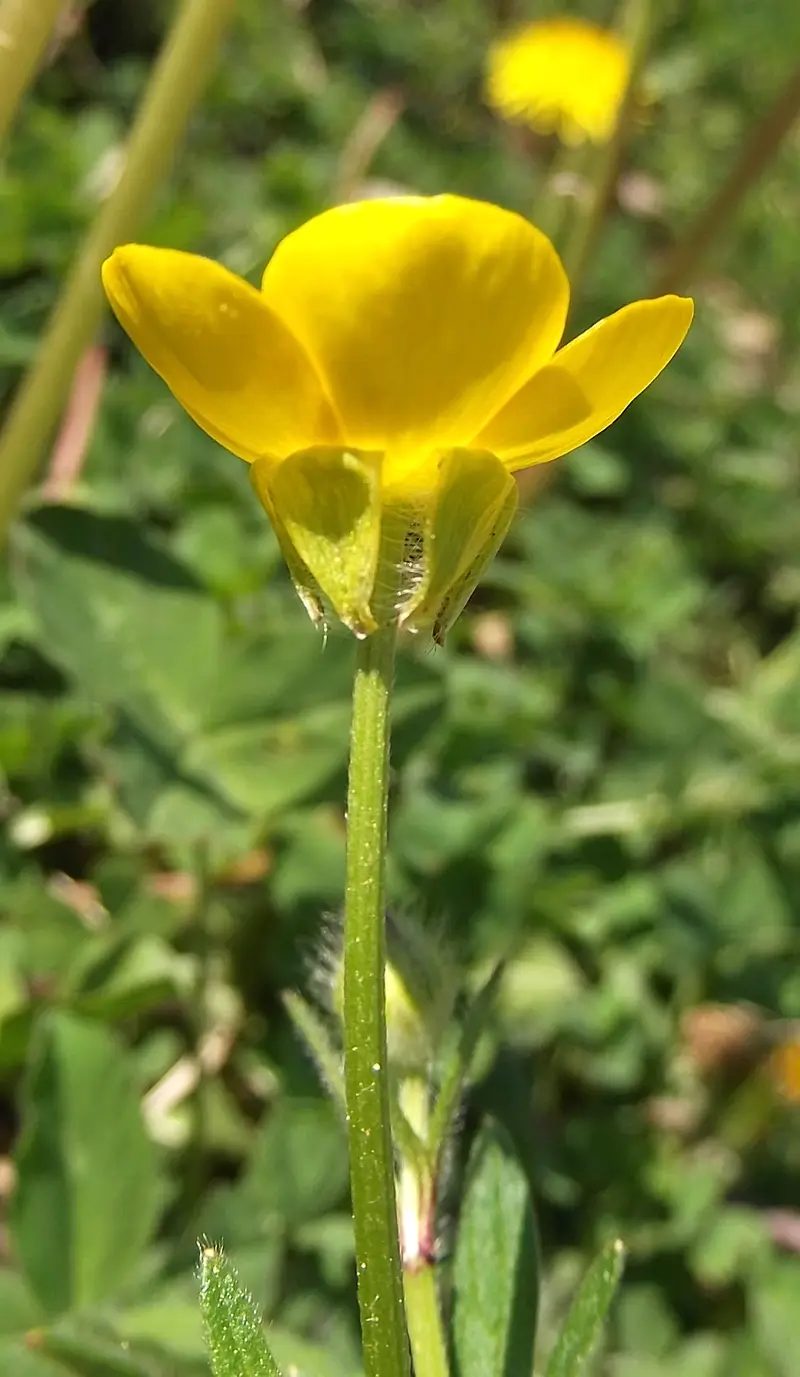
Bulbous buttercup is a native perennial easily told from other buttercups by the swollen, corm-like base of its stem, which sits just below the soil surface and stores food over winter. It is generally shorter and more compact than the meadow buttercup, with deeply divided, three-lobed leaves and bright, glossy yellow flowers. A useful field clue is the sepals, which turn sharply downwards and press back against the flower stalk.
It flowers earlier than most buttercups, chiefly in late spring, and prefers dry, well-drained ground, especially on chalk and limestone. Look for it in old pastures, downland, dunes and short grassland in full sun. The early, open flowers are a welcome source of pollen and nectar for emerging bees and other insects. It suits free-draining meadow and grassland seed mixes, particularly on lime-rich soils where damp-loving buttercups struggle.
Also known as
Bulbous Buttercup · Bulbous Crowfoot · Bulbous Crowsfoot · Cuckoo-buds · Gowan · St. Anthony's Turnip · Yellow Weed · Yellowweed
Synonyms
Ranunculus bipinnatus · Ranunculus bulbosus osiae · Ranunculus bulbosus osii · Ranunculus dissectus · Ranunculus gallecicus · Ranunculus neapolitanus · Ranunculus villiferus · Ranunculus villosus
In our seed mixes
Beta — under active development. This catalogue is still being built and accuracy-checked. The information here (including plant identifications, British native status, soil and sun/shade preferences) is provided in good faith for general guidance only and may contain errors or omissions. It must not be relied upon on its own — please confirm details with us before making planting, specification, foraging or purchasing decisions, and never eat or medicinally use any plant based on this catalogue alone, as some species are toxic. To the extent permitted by law, Phoenix Amenity Supplies accepts no liability for any loss arising from use of this information.