
Hieracium pilosella L.
Mouse-ear Hawkweed
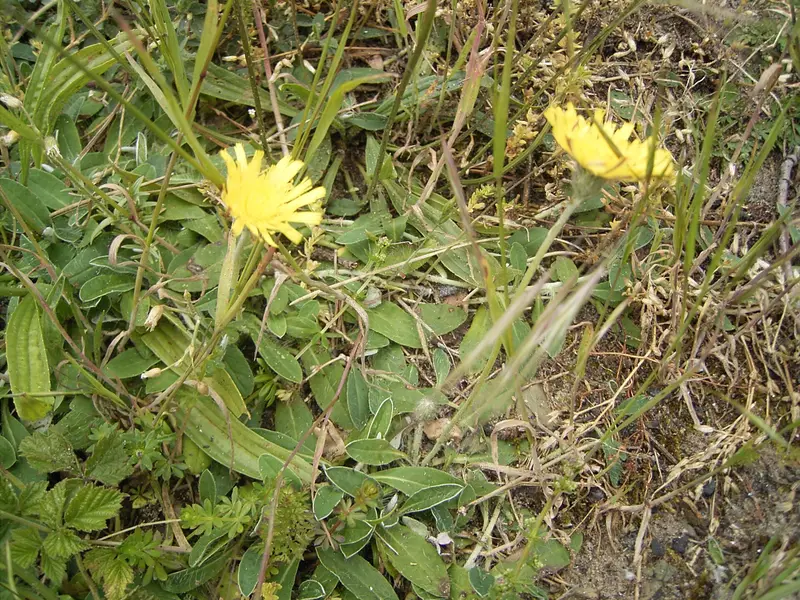
Mouse-ear hawkweed is a low, mat-forming perennial of the daisy family, spreading by leafy runners to form neat rosettes of small, oval leaves that are dark green above and white-felted beneath, edged with long hairs, hence both its English and scientific names. From each rosette a single, slender, leafless stalk carries one lemon-yellow flowerhead, the outer florets often tinged red below.
About
Mouse-ear hawkweed is a low, mat-forming perennial of the daisy family, spreading by leafy runners to form neat rosettes of small, oval leaves that are dark green above and white-felted beneath, edged with long hairs, hence both its English and scientific names. From each rosette a single, slender, leafless stalk carries one lemon-yellow flowerhead, the outer florets often tinged red below.
A British native, it is a plant of dry, short, open ground, thriving on sunny banks, heaths, dunes, lawns, verges and well-drained or sandy grassland where competition is low. It flowers from late spring through summer, and the bright heads are visited by bees and hoverflies. Its creeping, drought-tolerant habit makes it useful in short turf, green roofs and free-draining grassland mixes, where it knits together open, infertile ground.
Also known as
Mousear hawkweed · Mouseear Hawkweed
In our seed mixes
Beta — under active development. This catalogue is still being built and accuracy-checked. The information here (including plant identifications, British native status, soil and sun/shade preferences) is provided in good faith for general guidance only and may contain errors or omissions. It must not be relied upon on its own — please confirm details with us before making planting, specification, foraging or purchasing decisions, and never eat or medicinally use any plant based on this catalogue alone, as some species are toxic. To the extent permitted by law, Phoenix Amenity Supplies accepts no liability for any loss arising from use of this information.