
Betonica officinalis L.
Betony
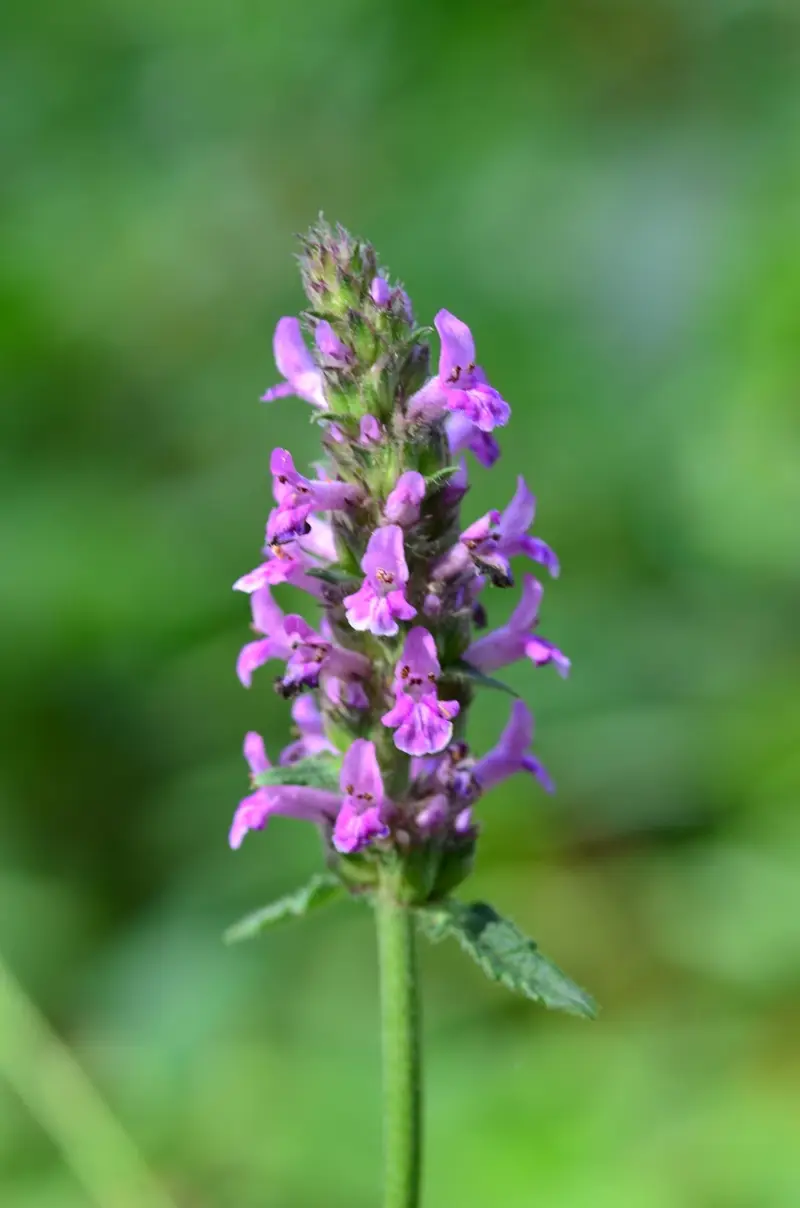
Betony, also known as wood betony or bishop's-wort, is a native British perennial of the dead-nettle family. It forms a low rosette of crinkled, scalloped-edged leaves from which slender, near-leafless stems rise to carry dense, oblong spikes of two-lipped reddish-purple flowers through the summer.
About
Betony, also known as wood betony or bishop's-wort, is a native British perennial of the dead-nettle family. It forms a low rosette of crinkled, scalloped-edged leaves from which slender, near-leafless stems rise to carry dense, oblong spikes of two-lipped reddish-purple flowers through the summer. The whole plant has the squarish stems typical of its family, and its tidy habit makes it easy to recognise once the flower heads appear.
It is a plant of open, well-drained ground, thriving on grassland, heaths, hedge banks, wood margins and other sunny or lightly shaded places, often on neutral to slightly acid soils. The nectar-rich flowers are popular with bumblebees, honeybees and other long-tongued insects, which makes betony a valuable addition to wildflower meadows, perennial borders and pollinator seed mixes. It pairs well with grasses and other meadow species and has a long history of use as a medicinal herb.
Also known as
Common betony · European hedge-nettle · bishop's-wort · common hedge-nettle · purple betony · wood betony
Synonyms
Betonica brachystachys · Betonica danica · Betonica officinalis glabrata · Betonica officinalis stricta · Betonica officinalis velebetica · Betonica quercetorum · Betonica subhirsuta · Betonica velebetica · Stachys betonica · Stachys officinalis · Stachys officinalis officinalis
In our seed mixes
- BFS 1 – Traditional Hay Meadow Wildflower Mix
- BFS 2 – Acid Grassland Wildflower Seed Mix for Sandy or Peaty Soils
- BFS 3 – Floodplain Meadow Grassland Seed Mix
- BFS1(F) – Traditional Hay Meadow 100% Wildflower
- BFS2(F)- Acid Grassland 100% Wildflowers for Sandy/Peaty Soils
- BFS3(F)-Floodplain 100% Meadow Grassland Mix
Beta — under active development. This catalogue is still being built and accuracy-checked. The information here (including plant identifications, British native status, soil and sun/shade preferences) is provided in good faith for general guidance only and may contain errors or omissions. It must not be relied upon on its own — please confirm details with us before making planting, specification, foraging or purchasing decisions, and never eat or medicinally use any plant based on this catalogue alone, as some species are toxic. To the extent permitted by law, Phoenix Amenity Supplies accepts no liability for any loss arising from use of this information.