
Trifolium dubium Sibth.
Cowhop Clover
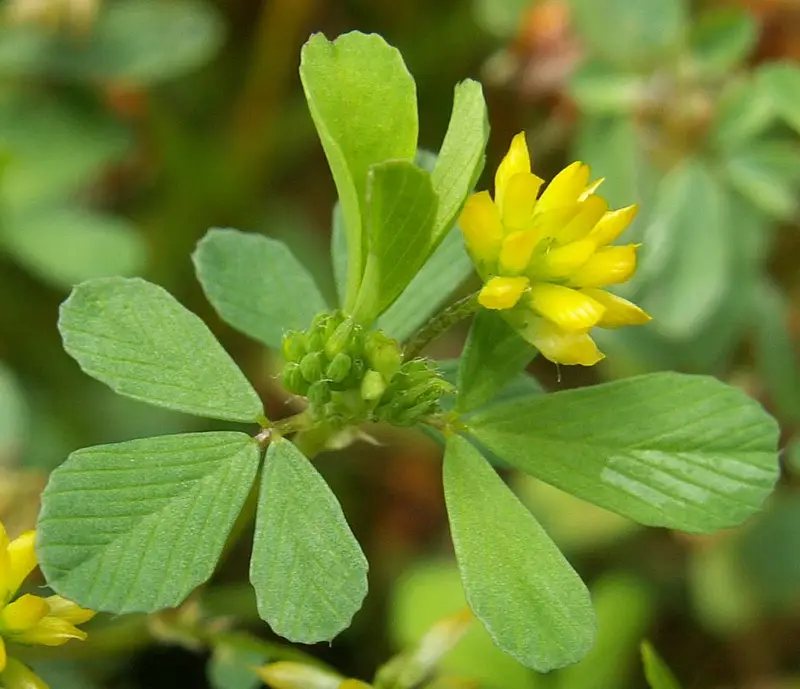
Lesser trefoil is a small, sprawling annual of the pea family and a familiar native British wildflower of short turf. Its slender, branching stems carry the classic three-part clover leaves, above which sit tight little rounded heads of tiny yellow pea-flowers, each cluster usually holding around ten to twenty blooms.
About
Lesser trefoil is a small, sprawling annual of the pea family and a familiar native British wildflower of short turf. Its slender, branching stems carry the classic three-part clover leaves, above which sit tight little rounded heads of tiny yellow pea-flowers, each cluster usually holding around ten to twenty blooms. As the flowers fade they turn pale brown and fold downwards, a useful clue to identification. It is one of the plants traditionally claimed as the original Irish shamrock.
Look for it from late spring through summer in lawns, short grassland, pasture, path edges, verges and waste ground, favouring open, sunny, well-drained ground where taller plants are kept in check by mowing or grazing. Like all clovers it fixes nitrogen and quietly improves poor soils, while the flowers offer nectar and pollen to bees and other small insects. It is an easy, unfussy component of wildflower lawns, short-sward meadow mixes and low-maintenance grassy areas.
Also known as
Irish Shamrock · Irish Shamrock, Small Hop Clover, Cow Hop Clover, Yellow Hop Clover, Shamrock · Least Hop Clover · Lesser Trefoil · Lesser Yellow Trefoil
Synonyms
Amarenus flavus · Chrysaspis dubia · Chrysaspis procumbens · Trifolium dubium atlanticum · Trifolium dubium dubium · Trifolium dubium microphyllum · Trifolium filiforme dubium · Trifolium filiforme major · Trifolium filiforme minus
Beta — under active development. This catalogue is still being built and accuracy-checked. The information here (including plant identifications, British native status, soil and sun/shade preferences) is provided in good faith for general guidance only and may contain errors or omissions. It must not be relied upon on its own — please confirm details with us before making planting, specification, foraging or purchasing decisions, and never eat or medicinally use any plant based on this catalogue alone, as some species are toxic. To the extent permitted by law, Phoenix Amenity Supplies accepts no liability for any loss arising from use of this information.