
Thymus drucei Ronniger
Wild Thyme
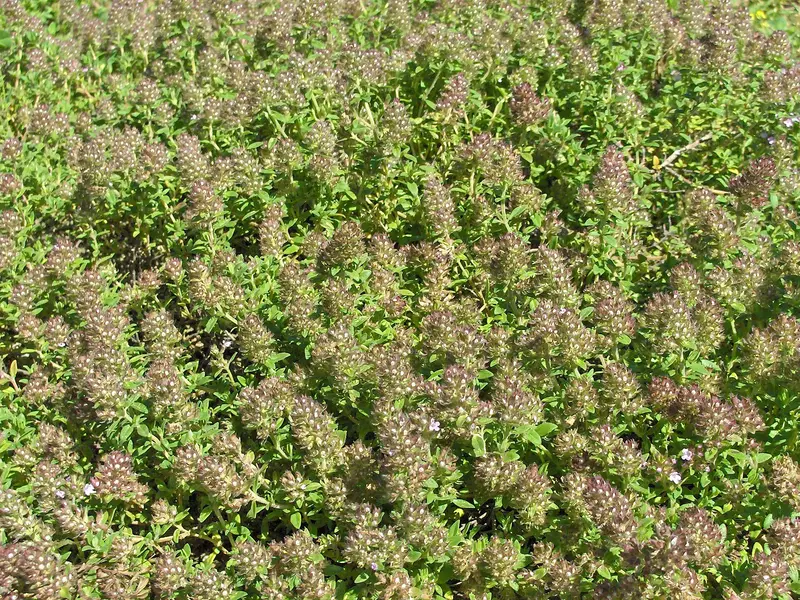
Wild thyme is a low, mat-forming native subshrub, the commonest wild thyme across the British Isles (also known under the names Thymus polytrichus and Thymus praecox). It creeps over the ground on wiry, rooting stems clothed in tiny aromatic leaves, forming dense cushions only a few centimetres high.
About
Wild thyme is a low, mat-forming native subshrub, the commonest wild thyme across the British Isles (also known under the names Thymus polytrichus and Thymus praecox). It creeps over the ground on wiry, rooting stems clothed in tiny aromatic leaves, forming dense cushions only a few centimetres high. In summer it is studded with rounded heads of small, two-lipped flowers in pinkish-purple to rose, releasing a warm, herby scent in the sun.
It is a plant of short, well-drained turf in open, sunny places, thriving on chalk and limestone grassland, heaths, sea cliffs, sand dunes, rocky outcrops and old anthills, and tolerating thin, poor soils. The flowers are hugely popular with bees, butterflies and other insects, and it is a key nectar plant on flowery grassland. Ideal for green roofs, rockeries, paving cracks and short-turf wildflower meadows and mixes.
Beta — under active development. This catalogue is still being built and accuracy-checked. The information here (including plant identifications, British native status, soil and sun/shade preferences) is provided in good faith for general guidance only and may contain errors or omissions. It must not be relied upon on its own — please confirm details with us before making planting, specification, foraging or purchasing decisions, and never eat or medicinally use any plant based on this catalogue alone, as some species are toxic. To the extent permitted by law, Phoenix Amenity Supplies accepts no liability for any loss arising from use of this information.