
Silene noctiflora L.
Night-Scented Catchfly
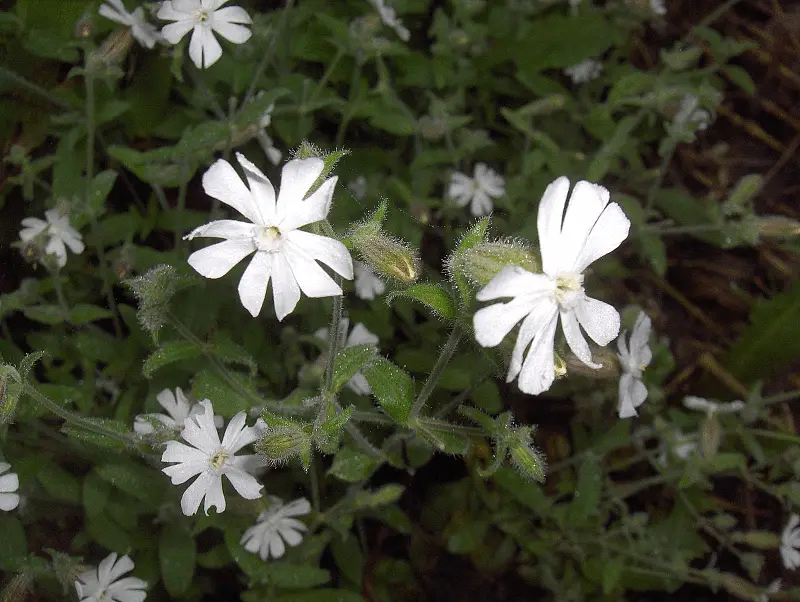
Night-flowering catchfly is an annual of arable land, introduced to Britain in ancient times and treated as an archaeophyte. Medium in height and covered in sticky, glandular hairs, it resembles a smaller white campion but is named for its remarkable habit: by day the deeply notched petals stay rolled and inconspicuous, white above and yellowish beneath, then unfurl at dusk to release a strong, sweet fragrance.
About
Night-flowering catchfly is an annual of arable land, introduced to Britain in ancient times and treated as an archaeophyte. Medium in height and covered in sticky, glandular hairs, it resembles a smaller white campion but is named for its remarkable habit: by day the deeply notched petals stay rolled and inconspicuous, white above and yellowish beneath, then unfurl at dusk to release a strong, sweet fragrance. It favours light, chalky and sandy soils, growing chiefly at the edges of arable fields and on other disturbed, open ground.
Flowering from July to September, the evening-scented blooms are pollinated by night-flying moths drawn to their generous nectar. Like many cornfield flowers it declined steeply through the twentieth century with herbicides, fertilisers and the shift to autumn-sown crops, though it remains locally frequent on the light soils of East Anglia. It suits arable conservation headlands and annual cornfield mixes on free-draining, lime-rich ground.
Also known as
Night-flowered Catchfly · Night-flowering Campion · Night-flowering Catchfly · Nightflowering Silene · Sticky Cockle
Synonyms
Cucubalus noctiflorus · Elisanthe noctiflora · Elsianthe noctiflora · Elsinanthe noctiflora · Lychnis noctiflora · Melandrium noctiflorum · Melandrium noctiflorum abnorme · Melandrium noctiflorum bessarabicum · Melandrium noctiflorum monanthum · Melandrium noctiflorum polyanthum · Melandrium noctiflorum robustum · Melandrium noctiflorum simplex
Beta — under active development. This catalogue is still being built and accuracy-checked. The information here (including plant identifications, British native status, soil and sun/shade preferences) is provided in good faith for general guidance only and may contain errors or omissions. It must not be relied upon on its own — please confirm details with us before making planting, specification, foraging or purchasing decisions, and never eat or medicinally use any plant based on this catalogue alone, as some species are toxic. To the extent permitted by law, Phoenix Amenity Supplies accepts no liability for any loss arising from use of this information.