
Silene gallica L.
Common catchfly
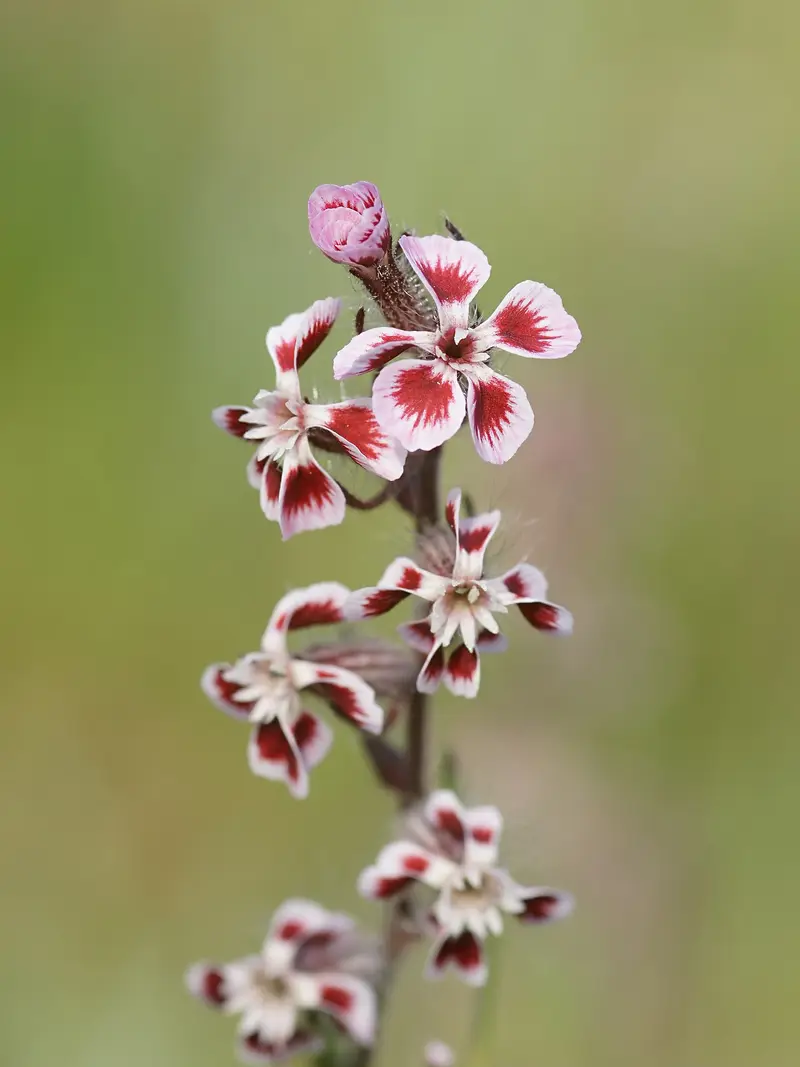
Small-flowered catchfly is a slender annual of cultivated and disturbed ground, present in Britain since ancient times as an archaeophyte. The upright, branching stems are clothed in sticky hairs, which trap small insects and give catchflies their name, and bear small flowers with five notched petals of dingy white, cream or sometimes pink.
About
Small-flowered catchfly is a slender annual of cultivated and disturbed ground, present in Britain since ancient times as an archaeophyte. The upright, branching stems are clothed in sticky hairs, which trap small insects and give catchflies their name, and bear small flowers with five notched petals of dingy white, cream or sometimes pink. It favours light, low-nutrient soils, growing at the margins of spring-sown arable crops and also on dry sunny banks near the sea, in poor coastal pastures, on dunes and along disused railway lines.
Flowering over a long season from June to October, it depends on disturbed, open ground for its seed. Once more widespread, it has declined sharply with agricultural intensification and is now a UK priority species, ranked endangered, with strongholds in Cornwall and the Isles of Scilly and scattered sites along the southern coast. It is a plant for arable conservation schemes and cornfield mixes on light, sandy soils.
Also known as
English catchfly · French catchfly · Small-flowered Catchfly · five-wound catchfly · small-flower catchfly
Synonyms
Corone agrestina · Corone gallica · Corone quinquevulnera · Cucubalus sylvestris · Cucubalus variegatus · Lychnis cerastioides · Lychnis cerastoides · Lychnis vulnerata · Oncerum gallicum · Silene agrestina · Silene agricola
Beta — under active development. This catalogue is still being built and accuracy-checked. The information here (including plant identifications, British native status, soil and sun/shade preferences) is provided in good faith for general guidance only and may contain errors or omissions. It must not be relied upon on its own — please confirm details with us before making planting, specification, foraging or purchasing decisions, and never eat or medicinally use any plant based on this catalogue alone, as some species are toxic. To the extent permitted by law, Phoenix Amenity Supplies accepts no liability for any loss arising from use of this information.