
Sherardia arvensis L.
Blue Field-madder
Field madder is a small, low-growing annual in the bedstraw family. In Britain it is thought to be truly native only in some western coastal habitats, and a long-established archaeophyte elsewhere, present since at least the Bronze Age.
About
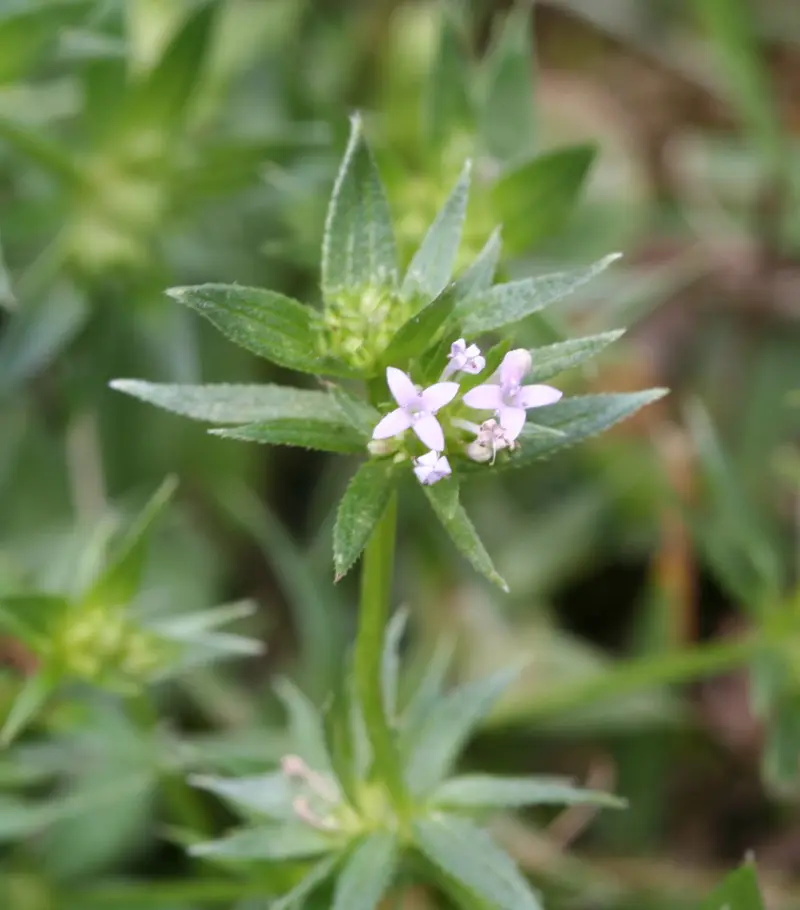
Field madder is a small, low-growing annual in the bedstraw family. In Britain it is thought to be truly native only in some western coastal habitats, and a long-established archaeophyte elsewhere, present since at least the Bronze Age. It forms spreading, mat-like growth of square, slightly bristly stems bearing whorls of small, pointed leaves. The flowers are distinctive for the family: tiny, lilac to mauve-pink funnels gathered into neat heads at the stem tips, ringed by a collar of leaf-like bracts, opening over a long season through spring and summer.
It grows on open, well-drained ground, including arable fields and margins, dry grassland, tracksides, sand dunes and waste places. Once a frequent cornfield weed whose roots gave an inferior red dye, it has declined markedly with the intensification of farming since the mid-twentieth century. Today it is chiefly valued in arable plant conservation and in mixes designed for cultivated field margins.
Also known as
Blue Fieldmadder · Field Madder · Herb-sherard · blue field madder · cultivated field madder
Synonyms
Asperula sherardia · Asperula sherardia maritima · Asperula sherardia typica · Asperula sherardii maritima · Asperula sherardii typica · Asterophyllum scherardianum · Galium sherardia · Hexadontocarpus arvensis · Hexodontocarpus arvensis · Sherardia affinis · Sherardia agraria
Beta — under active development. This catalogue is still being built and accuracy-checked. The information here (including plant identifications, British native status, soil and sun/shade preferences) is provided in good faith for general guidance only and may contain errors or omissions. It must not be relied upon on its own — please confirm details with us before making planting, specification, foraging or purchasing decisions, and never eat or medicinally use any plant based on this catalogue alone, as some species are toxic. To the extent permitted by law, Phoenix Amenity Supplies accepts no liability for any loss arising from use of this information.