
Saponaria officinalis L.
Bladder Soapwort
Soapwort, also known as bouncing bet, is a robust perennial long established in Britain as an archaeophyte. Once thought possibly native in a few western counties, it is now regarded as an introduced plant throughout, originating in central and southern Europe and Asia and brought here for its cleansing properties, as its sap lathers in water.
About
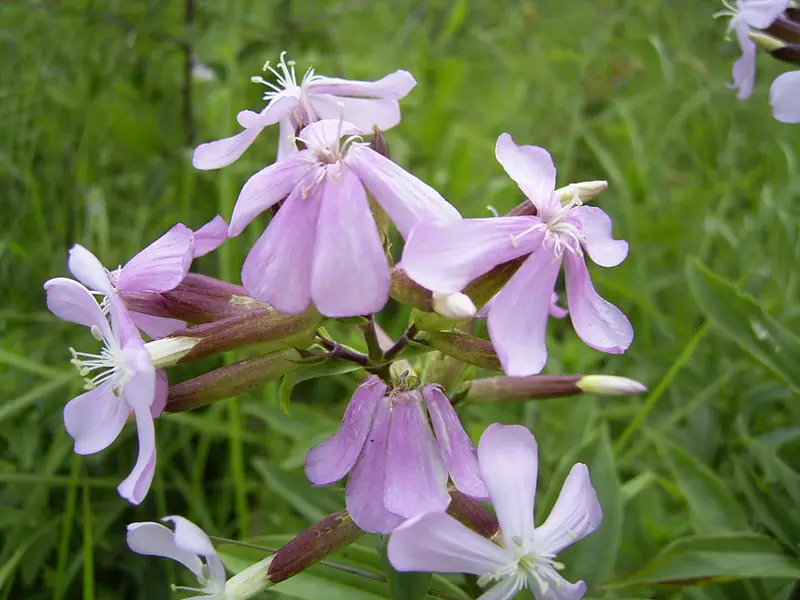
Soapwort, also known as bouncing bet, is a robust perennial long established in Britain as an archaeophyte. Once thought possibly native in a few western counties, it is now regarded as an introduced plant throughout, originating in central and southern Europe and Asia and brought here for its cleansing properties, as its sap lathers in water. It spreads vigorously by creeping rhizomes and stolons to form persistent patches, sending up leafy stems to around 60 to 90cm topped with clusters of fragrant pink or white flowers.
Flowering from July to September, the sizeable blooms release their scent in the evening and are visited by moths and long-tongued bees. In the wild it favours grassy roadside verges and banks, waste ground, walls and quarries on moderately fertile soils. Easygoing and showy, it suits informal borders, banks and naturalistic plantings, though its spreading habit means it is best given room or contained.
Also known as
Bouncing Bet · Bouncingbet · Bouncingbet Soapweed · China Cockle · Soapwort
Synonyms
Bootia saponaria · Bootia vulgaris · Lychnis officinalis · Lychnis saponaria · Sabulina hybrida · Saponaria alluvionalis · Saponaria hybrida · Saponaria nervosa · Saponaria officinalis abnormis · Saponaria officinalis glaberrima · Saponaria officinalis macropetala · Saponaria officinalis pleniflora
Beta — under active development. This catalogue is still being built and accuracy-checked. The information here (including plant identifications, British native status, soil and sun/shade preferences) is provided in good faith for general guidance only and may contain errors or omissions. It must not be relied upon on its own — please confirm details with us before making planting, specification, foraging or purchasing decisions, and never eat or medicinally use any plant based on this catalogue alone, as some species are toxic. To the extent permitted by law, Phoenix Amenity Supplies accepts no liability for any loss arising from use of this information.