
Ranunculus arvensis L.
Corn Buttercup
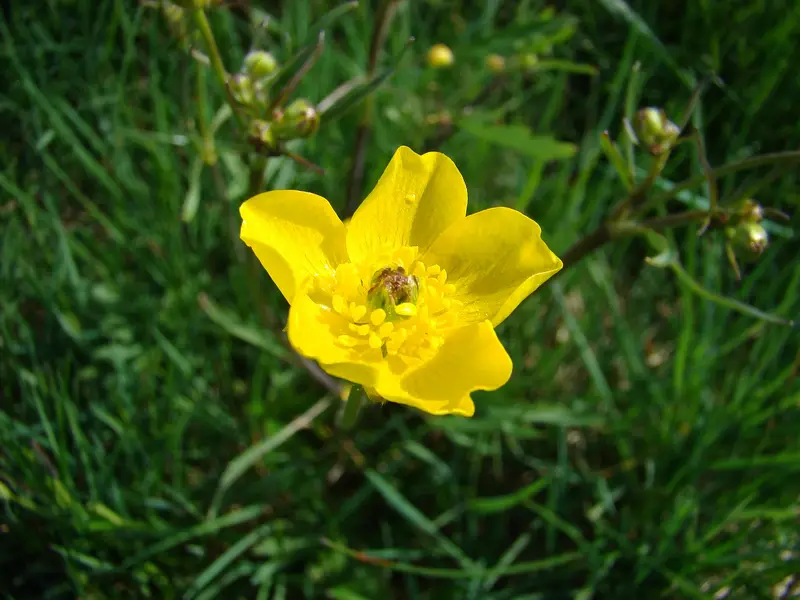
Corn Buttercup is an annual of arable land, an archaeophyte that has grown in Britain since at least Roman times. An upright, branching plant, it has deeply cut leaves divided into narrow segments and bears rather small, pale lemon-yellow flowers in late spring and early summer.
About
Corn Buttercup is an annual of arable land, an archaeophyte that has grown in Britain since at least Roman times. An upright, branching plant, it has deeply cut leaves divided into narrow segments and bears rather small, pale lemon-yellow flowers in late spring and early summer. Its most distinctive feature is the fruit: unlike any other British buttercup, the achenes are large and covered in stout spines or hooks, a burr-like seed-head that explains old names such as devil-on-all-sides.
Once an abundant and troublesome weed of cornfields on heavier, often calcareous soils, it has undergone a dramatic decline through improved seed cleaning, herbicides and the intensification of arable farming, and is now rare and a recognised conservation priority. It needs open, cultivated ground in full sun. Like other buttercups it is poisonous to livestock, but as a vanishing part of our native arable flora it is valued in cornfield annual mixes and conservation field margins.
Also known as
Corn buttercup, Corn crow-foot · Devil-on-all-sides · corn crowfoot · field buttercup
Synonyms
Cynomorbium heterophyllum · Hegiella arvensis · Hegiella inermis · Hericinia arvensis · Pachyloma arvense · Pachyloma arvensis · Pfundia arvensis · Ranunculus arvensis arvensis · Ranunculus arvensis radicans · Ranunculus arvensis tuberculatus
Beta — under active development. This catalogue is still being built and accuracy-checked. The information here (including plant identifications, British native status, soil and sun/shade preferences) is provided in good faith for general guidance only and may contain errors or omissions. It must not be relied upon on its own — please confirm details with us before making planting, specification, foraging or purchasing decisions, and never eat or medicinally use any plant based on this catalogue alone, as some species are toxic. To the extent permitted by law, Phoenix Amenity Supplies accepts no liability for any loss arising from use of this information.