
Pedicularis palustris L.
European purple lousewort
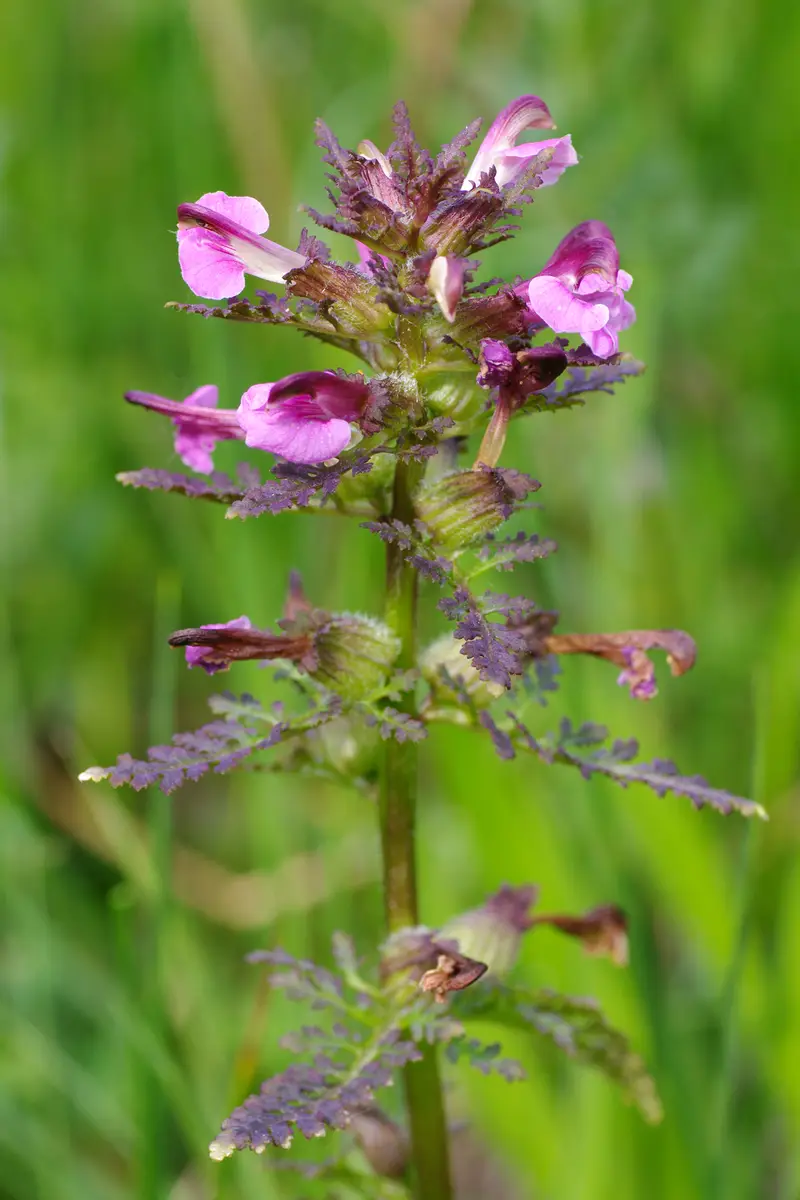
Marsh lousewort is a native British wild plant of damp ground and a member of the broomrape family (Orobanchaceae). Like its better-known relative yellow rattle, it is a root hemiparasite, tapping into the roots of surrounding grasses and other plants to draw off water and nutrients, which helps keep competing vegetation in check.
About
Marsh lousewort is a native British wild plant of damp ground and a member of the broomrape family (Orobanchaceae). Like its better-known relative yellow rattle, it is a root hemiparasite, tapping into the roots of surrounding grasses and other plants to draw off water and nutrients, which helps keep competing vegetation in check. It is short-lived, usually behaving as an annual or biennial, carrying clusters of two-lipped, pinkish-purple flowers on reddish, branching stems.
It grows in genuinely wet places — fens, wet meadows, valley bogs, ditches and hillside flushes — and tolerates everything from base-rich to fairly acid conditions, which sets it apart from the acid-loving common lousewort. Flowering runs from around April to July, when the blooms are worked by long-tongued bumblebees. In the wild it is most frequent in Scotland, Ireland, Wales, western England and East Anglia. For growers it is a specialist for wetland and fen restoration, where its parasitism on grasses can help open up the sward for other marsh flora.
Also known as
Marsh Lousewort · Red Rattle · marsh redrattle · swamp lousewort · swamp-lousewort
Synonyms
Pedicularis palustris palustris · Pedicularis wlassoviana
Beta — under active development. This catalogue is still being built and accuracy-checked. The information here (including plant identifications, British native status, soil and sun/shade preferences) is provided in good faith for general guidance only and may contain errors or omissions. It must not be relied upon on its own — please confirm details with us before making planting, specification, foraging or purchasing decisions, and never eat or medicinally use any plant based on this catalogue alone, as some species are toxic. To the extent permitted by law, Phoenix Amenity Supplies accepts no liability for any loss arising from use of this information.