
Papaver orientale L.
Oriental Poppy
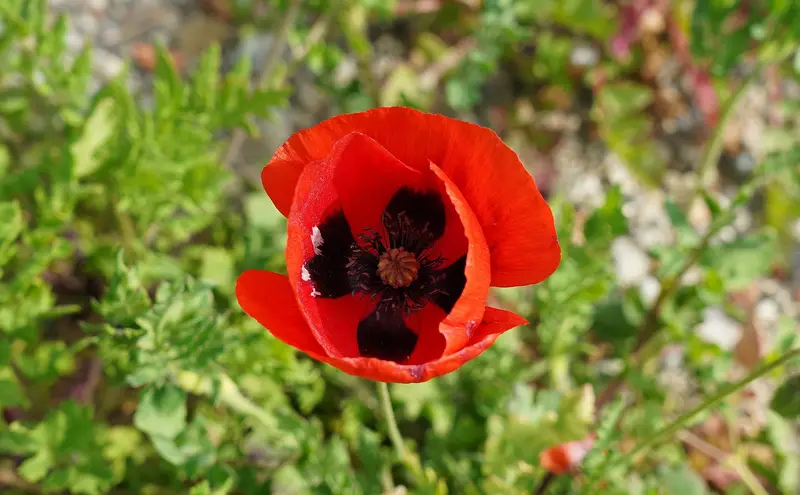
The Oriental poppy is a bold, clump-forming perennial native to the Caucasus, north-eastern Turkey and northern Iran, and a long-established favourite in gardens. It produces a mound of coarse, hairy, deeply divided leaves from which rise stout stems carrying very large, bowl-shaped flowers, typically in brilliant scarlet or orange with a dark blotch at the base of each crinkled, papery petal, though many cultivated colours exist.
About
The Oriental poppy is a bold, clump-forming perennial native to the Caucasus, north-eastern Turkey and northern Iran, and a long-established favourite in gardens. It produces a mound of coarse, hairy, deeply divided leaves from which rise stout stems carrying very large, bowl-shaped flowers, typically in brilliant scarlet or orange with a dark blotch at the base of each crinkled, papery petal, though many cultivated colours exist. Flowering comes in late spring and early summer.
It suits an open, sunny position on deep, fertile, well-drained soil; the foliage tends to die back after flowering before reappearing later. The big, pollen-rich flowers attract bees. This is a cultivated garden perennial rather than a British wildflower, valued for its dramatic early-summer colour in herbaceous and mixed borders, where it is often placed among later-flowering plants that fill the gap left when its leaves retreat.
Synonyms
Calomecon orientale · Papaver dzeghamicum · Papaver grandiflorum · Papaver spectabile
In our seed mixes
Beta — under active development. This catalogue is still being built and accuracy-checked. The information here (including plant identifications, British native status, soil and sun/shade preferences) is provided in good faith for general guidance only and may contain errors or omissions. It must not be relied upon on its own — please confirm details with us before making planting, specification, foraging or purchasing decisions, and never eat or medicinally use any plant based on this catalogue alone, as some species are toxic. To the extent permitted by law, Phoenix Amenity Supplies accepts no liability for any loss arising from use of this information.