
Onobrychis viciifolia Scop.
Common Sainfoin
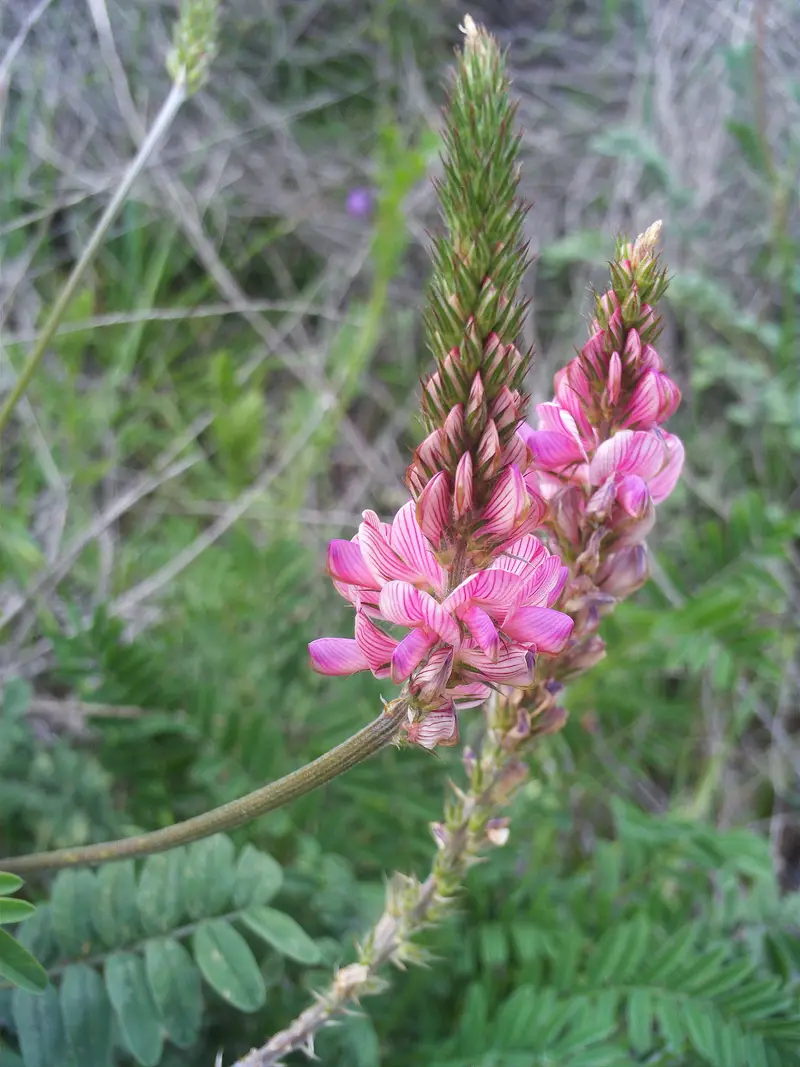
Sainfoin is a handsome perennial legume that makes a striking show of conical spikes packed with bright pink flowers, each one finely veined in deeper red, held above divided leaves of many small leaflets. It is deep-rooted and well adapted to dry, thin soils, and its name comes from the French for healthy hay, a nod to its long history as a fodder plant.
About
Sainfoin is a handsome perennial legume that makes a striking show of conical spikes packed with bright pink flowers, each one finely veined in deeper red, held above divided leaves of many small leaflets. It is deep-rooted and well adapted to dry, thin soils, and its name comes from the French for healthy hay, a nod to its long history as a fodder plant.
In Britain it is associated with dry, lime-rich grassland over chalk and limestone in southern England, though its true status is debated: a form may be genuinely native there, while agricultural strains have been sown for centuries, blurring the picture. It flowers in early to mid-summer and is exceptionally attractive to bees and other pollinators, often humming with insects when in bloom. Valued both as nutritious forage and for restoring calcareous grassland, it is a popular choice for meadow and pollinator mixes on free-draining alkaline soils.
Also known as
Esparcet · Holy-clover · Sainfoin · Sainfoin Legume · Sanfoin · vicia-leaved holy-clover
Synonyms
Hedysarum collinum · Hedysarum echinatum · Hedysarum montanum · Hedysarum onobrichis · Hedysarum onobrychioides · Hedysarum onobrychis · Hedysarum onobrychis canone · Onobrychis alba · Onobrychis bifera · Onobrychis collina · Onobrychis esponellae
In our seed mixes
Beta — under active development. This catalogue is still being built and accuracy-checked. The information here (including plant identifications, British native status, soil and sun/shade preferences) is provided in good faith for general guidance only and may contain errors or omissions. It must not be relied upon on its own — please confirm details with us before making planting, specification, foraging or purchasing decisions, and never eat or medicinally use any plant based on this catalogue alone, as some species are toxic. To the extent permitted by law, Phoenix Amenity Supplies accepts no liability for any loss arising from use of this information.