
Myrrhis odorata (L.) Scop.
Anise
Sweet cicely is an aromatic perennial of the carrot family, not native to Britain but long naturalised here, especially across northern England, Scotland and Northern Ireland. Originally from the mountains of central and southern Europe, it was introduced as a culinary and strewing herb and has since established along verges, hedge banks, riversides and damp grassy places.
About
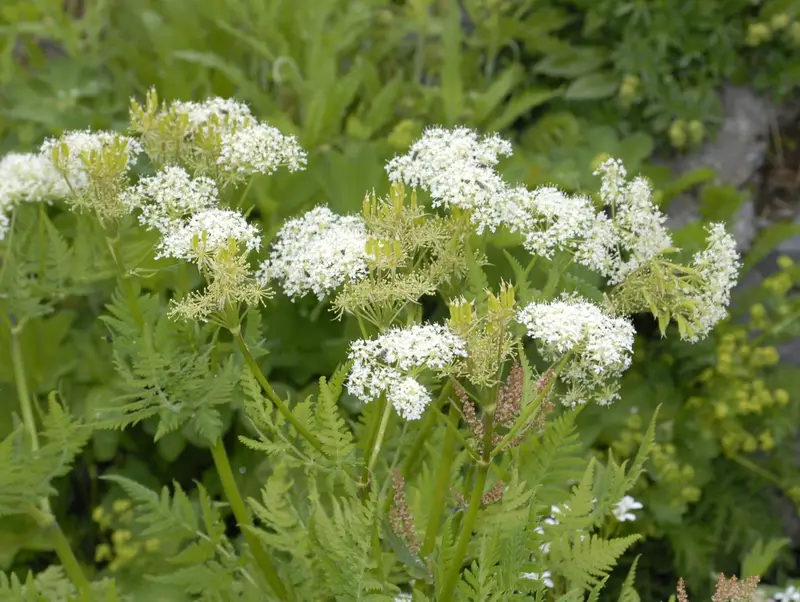
Sweet cicely is an aromatic perennial of the carrot family, not native to Britain but long naturalised here, especially across northern England, Scotland and Northern Ireland. Originally from the mountains of central and southern Europe, it was introduced as a culinary and strewing herb and has since established along verges, hedge banks, riversides and damp grassy places. The whole plant smells strongly of aniseed, with soft, ferny, finely divided leaves often flecked with pale markings and hollow stems carrying frothy umbels of small white flowers, followed by long, ridged, dark seeds.
It favours moist, fertile soil in light shade or sun and forms generous leafy clumps. Flowering in late spring and early summer, the blossom offers early nectar to bees, hoverflies and other insects. Traditionally valued in the kitchen, where its sweet aniseed flavour reduces the tartness of cooked fruit, it works well in shadier border edges, woodland-style plantings and herb gardens.
Also known as
Cicely · Garden Myrrh · Myrrh · Sweet Chervil · Sweet Cicely
Synonyms
Chaerophyllum odoratum · Lindera odorata · Myrrhis brevipedunculata · Myrrhis iberica · Myrrhis odorata culta · Myrrhis odorata sulcata · Myrrhis sulcata · Scandix odorata · Selinum myrrhis
Beta — under active development. This catalogue is still being built and accuracy-checked. The information here (including plant identifications, British native status, soil and sun/shade preferences) is provided in good faith for general guidance only and may contain errors or omissions. It must not be relied upon on its own — please confirm details with us before making planting, specification, foraging or purchasing decisions, and never eat or medicinally use any plant based on this catalogue alone, as some species are toxic. To the extent permitted by law, Phoenix Amenity Supplies accepts no liability for any loss arising from use of this information.