
Lysimachia vulgaris L.
Garden Loosestrife
Yellow Loosestrife is a tall, handsome native perennial of wet places, found beside rivers, in fens, marshes, wet woodland and ditches and on lake and pond margins across much of Britain. Spreading by creeping rhizomes into substantial stands, it produces upright leafy stems often 60 to 150cm tall, with willowy leaves in whorls or opposite pairs.
About
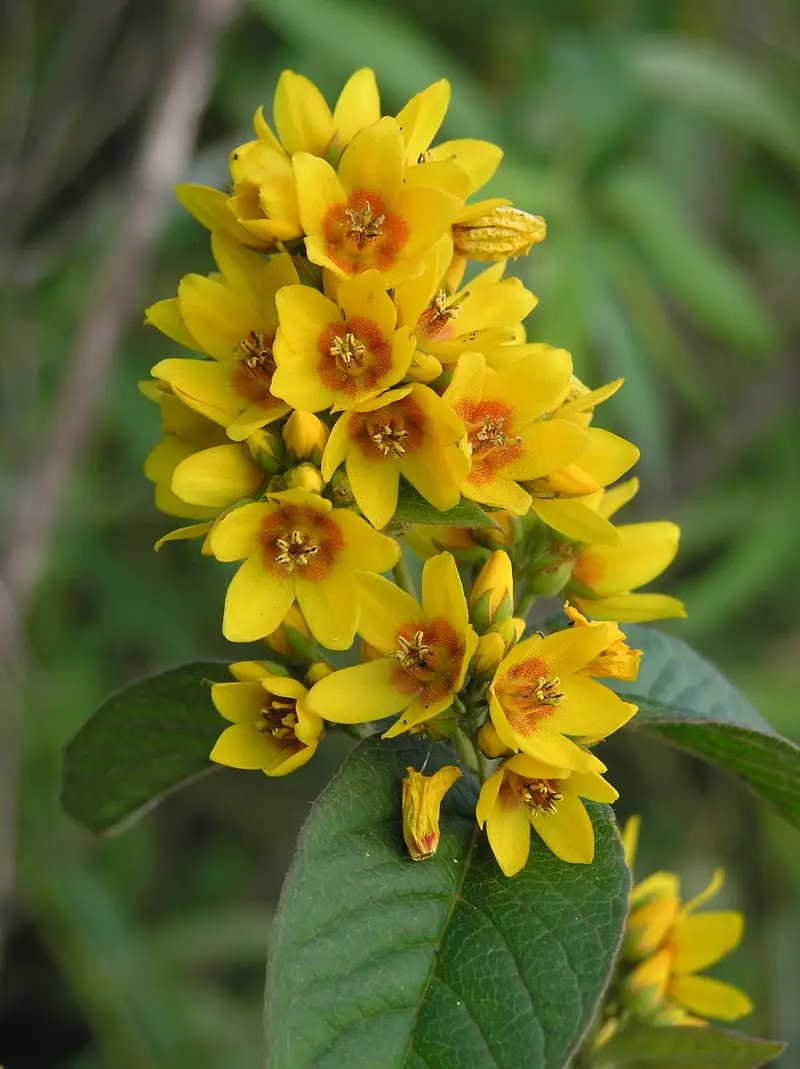
Yellow Loosestrife is a tall, handsome native perennial of wet places, found beside rivers, in fens, marshes, wet woodland and ditches and on lake and pond margins across much of Britain. Spreading by creeping rhizomes into substantial stands, it produces upright leafy stems often 60 to 150cm tall, with willowy leaves in whorls or opposite pairs. From midsummer the stem tops branch into airy pyramidal clusters of bright golden-yellow, cup-shaped flowers, each with five pointed petals.
It thrives on permanently moist to wet, fertile soils in sun or light shade and makes a striking vertical element for pond edges, bog gardens, rain gardens and damp wildlife borders, though it can spread vigorously. Most remarkably, the flowers produce no nectar but instead offer pollen and fatty floral oils that are gathered by a specialist solitary bee, the yellow loosestrife bee (Macropis europaea); the female uses the oil to waterproof her nest burrows. Supporting this scarce bee is reason enough to grow it.
Also known as
Garden Yellow Loosestrife · Loosestrife · Willow-weed · Willowwort · Yellow Loosestrife
Synonyms
Lysimachia capillaris · Lysimachia dittrichii · Lysimachia elata · Lysimachia fauriei · Lysimachia glauca · Lysimachia guestphalica · Lysimachia konradii · Lysimachia lutea
Beta — under active development. This catalogue is still being built and accuracy-checked. The information here (including plant identifications, British native status, soil and sun/shade preferences) is provided in good faith for general guidance only and may contain errors or omissions. It must not be relied upon on its own — please confirm details with us before making planting, specification, foraging or purchasing decisions, and never eat or medicinally use any plant based on this catalogue alone, as some species are toxic. To the extent permitted by law, Phoenix Amenity Supplies accepts no liability for any loss arising from use of this information.