
Lipandra polysperma (L.) S.Fuentes, Uotila & Borsch
European Goosefoot
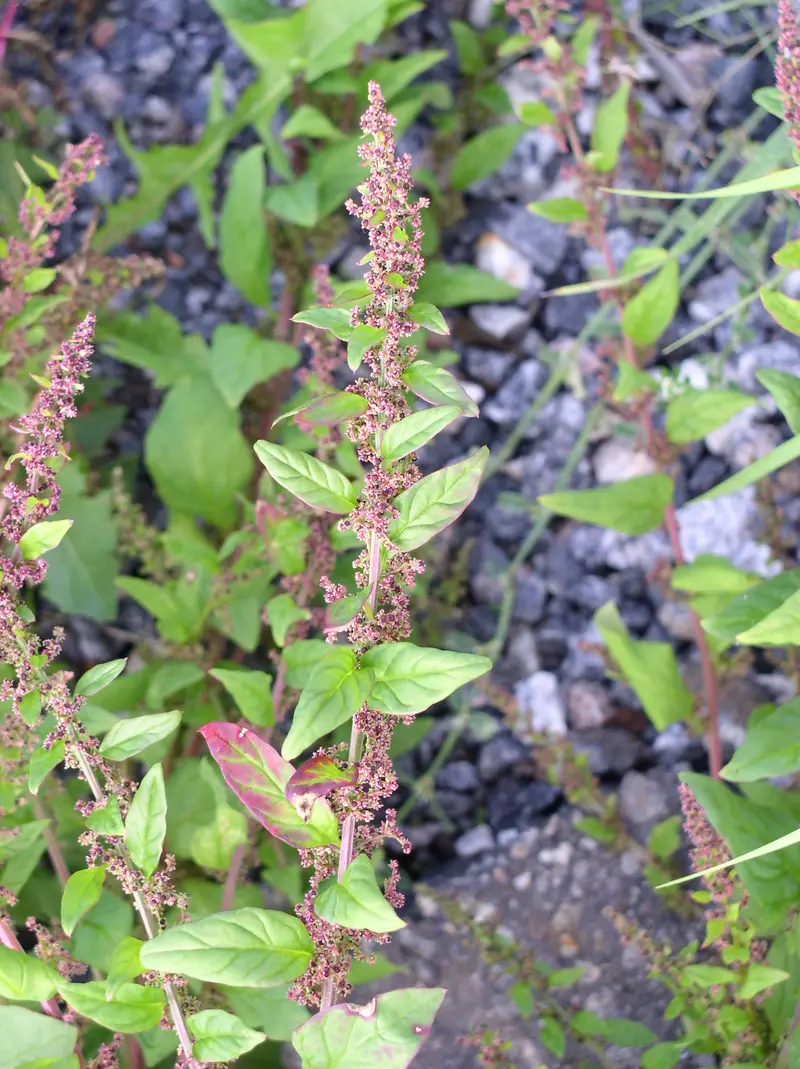
Many-seeded goosefoot is a long-established introduction to Britain, an archaeophyte rather than a true native, but one so settled on cultivated and disturbed land that it is part of the familiar arable flora. It is a hairless, non-aromatic annual that can reach a metre but often sprawls, with slender, sometimes reddish stems and untoothed, oval leaves.
About
Many-seeded goosefoot is a long-established introduction to Britain, an archaeophyte rather than a true native, but one so settled on cultivated and disturbed land that it is part of the familiar arable flora. It is a hairless, non-aromatic annual that can reach a metre but often sprawls, with slender, sometimes reddish stems and untoothed, oval leaves. It favours light, moderately acid to neutral, nutrient-rich soils and turns up on arable field edges, allotments, gardens, quarries, sand-pits, pond margins and other bare, open ground, mainly in England, Wales and southern Scotland.
The tiny green flowers are borne in loose, leafy spikes through the second half of summer and into autumn, wind-pollinated and easily overlooked, and they ripen into the abundant seed that gives the plant its name. It is chiefly of interest in arable conservation and as a food source for seed-eating farmland birds, rather than as an ornamental, but it supports the wider web of life on cultivated ground.
Also known as
Many-seed Goosefoot · Many-seeded Goosefoot · Manyseed Goosefoot
Synonyms
Anserina betaefolia · Anserina betifolia · Atriplex polysperma · Blitum polyspermum · Chenopodium acutifolium · Chenopodium angustifolium · Chenopodium arrectum · Chenopodium bisaeriale · Chenopodium biseriale · Chenopodium ellipticum · Chenopodium marginatum
Beta — under active development. This catalogue is still being built and accuracy-checked. The information here (including plant identifications, British native status, soil and sun/shade preferences) is provided in good faith for general guidance only and may contain errors or omissions. It must not be relied upon on its own — please confirm details with us before making planting, specification, foraging or purchasing decisions, and never eat or medicinally use any plant based on this catalogue alone, as some species are toxic. To the extent permitted by law, Phoenix Amenity Supplies accepts no liability for any loss arising from use of this information.