
Lathyrus odoratus L.
Guisante de Olor
The sweet pea is a much-loved garden annual climber native to Sicily and southern Italy, not a British wildflower. It scrambles upward by clinging tendrils, reaching well over head height in good conditions, with paired leaflets and slender stems.
About
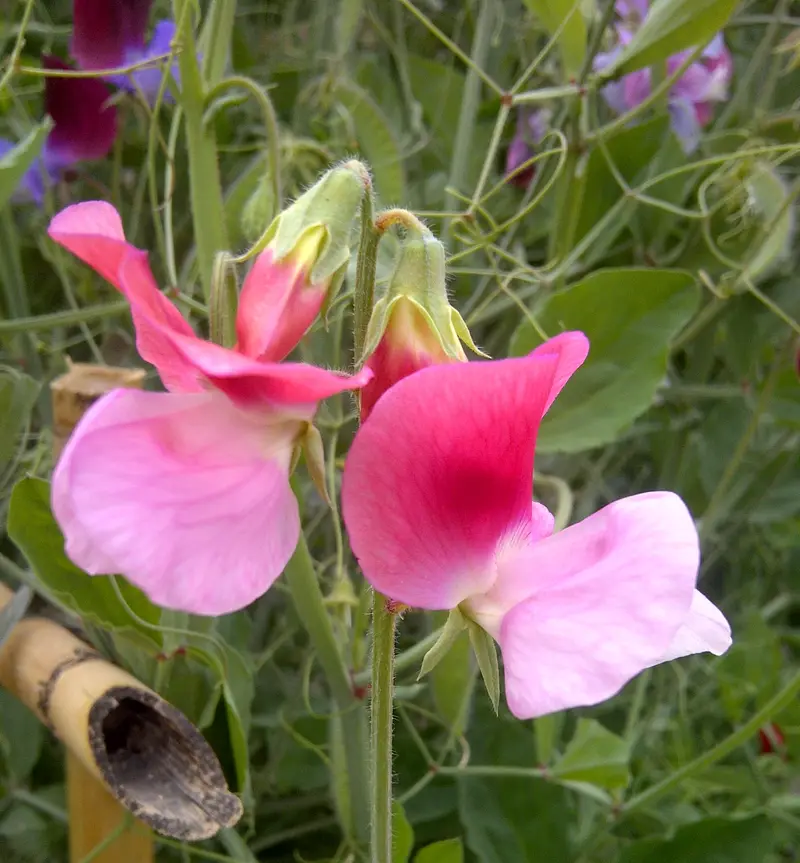
The sweet pea is a much-loved garden annual climber native to Sicily and southern Italy, not a British wildflower. It scrambles upward by clinging tendrils, reaching well over head height in good conditions, with paired leaflets and slender stems. Its butterfly-shaped flowers come in a wide range of colours, from white and soft pastels to deep pinks, purples and reds, and many forms are prized for a strong, sweet fragrance.
Grown from seed and usually trained up supports such as canes, netting or trellis, it flowers prolifically through summer, especially when blooms are picked regularly for the vase. The flowers are visited by bees, though the highly bred ornamental varieties are valued mainly for cutting and scent. It belongs in borders, cottage gardens and cut-flower beds rather than native seed mixes, and as a legume it returns some nitrogen to the soil.
Also known as
Sweet Pea · Sweetpea · sweet-pea
Synonyms
Lathyrus cyprius · Lathyrus maccaguenii · Lathyrus odoratus albus · Lathyrus odoratus ater · Lathyrus odoratus carneus · Lathyrus odoratus pardalinus · Lathyrus odoratus pleniflorus · Lathyrus odoratus roseoalbus · Lathyrus odoratus roseovittata · Lathyrus odoratus siculus · Lathyrus odoratus vulgaris
In our seed mixes
Beta — under active development. This catalogue is still being built and accuracy-checked. The information here (including plant identifications, British native status, soil and sun/shade preferences) is provided in good faith for general guidance only and may contain errors or omissions. It must not be relied upon on its own — please confirm details with us before making planting, specification, foraging or purchasing decisions, and never eat or medicinally use any plant based on this catalogue alone, as some species are toxic. To the extent permitted by law, Phoenix Amenity Supplies accepts no liability for any loss arising from use of this information.