
Lamium purpureum L.
Purple Dead-nettle
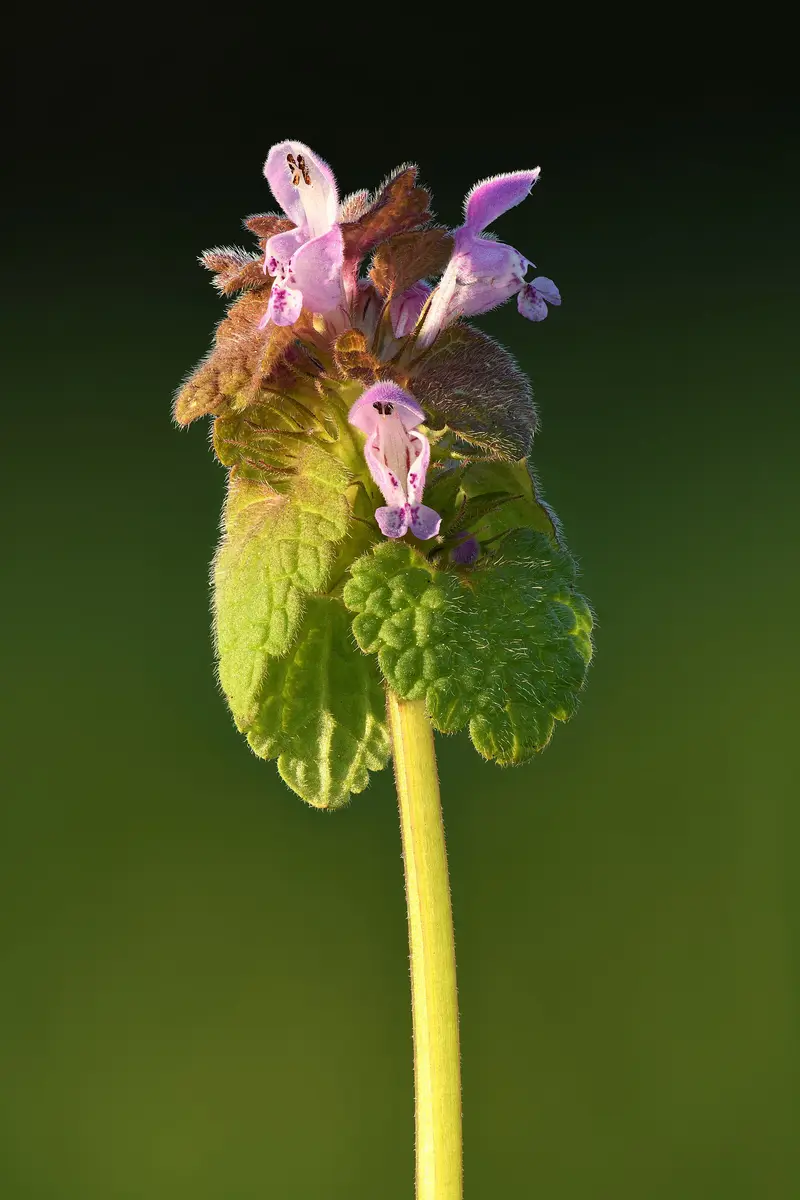
Red dead-nettle is a low, spreading annual of the mint family, usually only 10–30cm tall, with soft, heart-shaped leaves that are often flushed purple towards the top of the plant. Despite the name it has no sting.
About
Red dead-nettle is a low, spreading annual of the mint family, usually only 10–30cm tall, with soft, heart-shaped leaves that are often flushed purple towards the top of the plant. Despite the name it has no sting. Clusters of small, two-lipped pinkish-purple flowers sit among the upper leaves and can appear over a remarkably long season, from early spring right through to autumn in mild conditions.
It is one of the most common plants of cultivated and disturbed ground, colonising gardens, allotments, arable fields, verges and waste places on a wide range of soils in sun or light shade. Its early and prolonged flowering makes it a valuable nectar and pollen source for emerging bumblebees, honeybees and hoverflies when little else is in bloom. A useful component of pollinator and disturbed-ground seed mixes, it also self-sows readily as low ground cover.
Also known as
Purple Deadnettle · Red Archangel · Red Dead-nettle · purple archangel · purple henbit
Synonyms
Lamiopsis purpurea · Lamium foetidum · Lamium nudum · Lamium purpureum albiflora · Lamium urticaefolium
Beta — under active development. This catalogue is still being built and accuracy-checked. The information here (including plant identifications, British native status, soil and sun/shade preferences) is provided in good faith for general guidance only and may contain errors or omissions. It must not be relied upon on its own — please confirm details with us before making planting, specification, foraging or purchasing decisions, and never eat or medicinally use any plant based on this catalogue alone, as some species are toxic. To the extent permitted by law, Phoenix Amenity Supplies accepts no liability for any loss arising from use of this information.