
Hyacinthoides non-scripta (L.) Chouard ex Rothm.
Bluebell
The English or common bluebell is a much-loved native British bulb, famous for carpeting ancient woodlands in spring with drifts of violet-blue. Britain holds a large share of the world's population, making it a plant of real conservation importance.
About
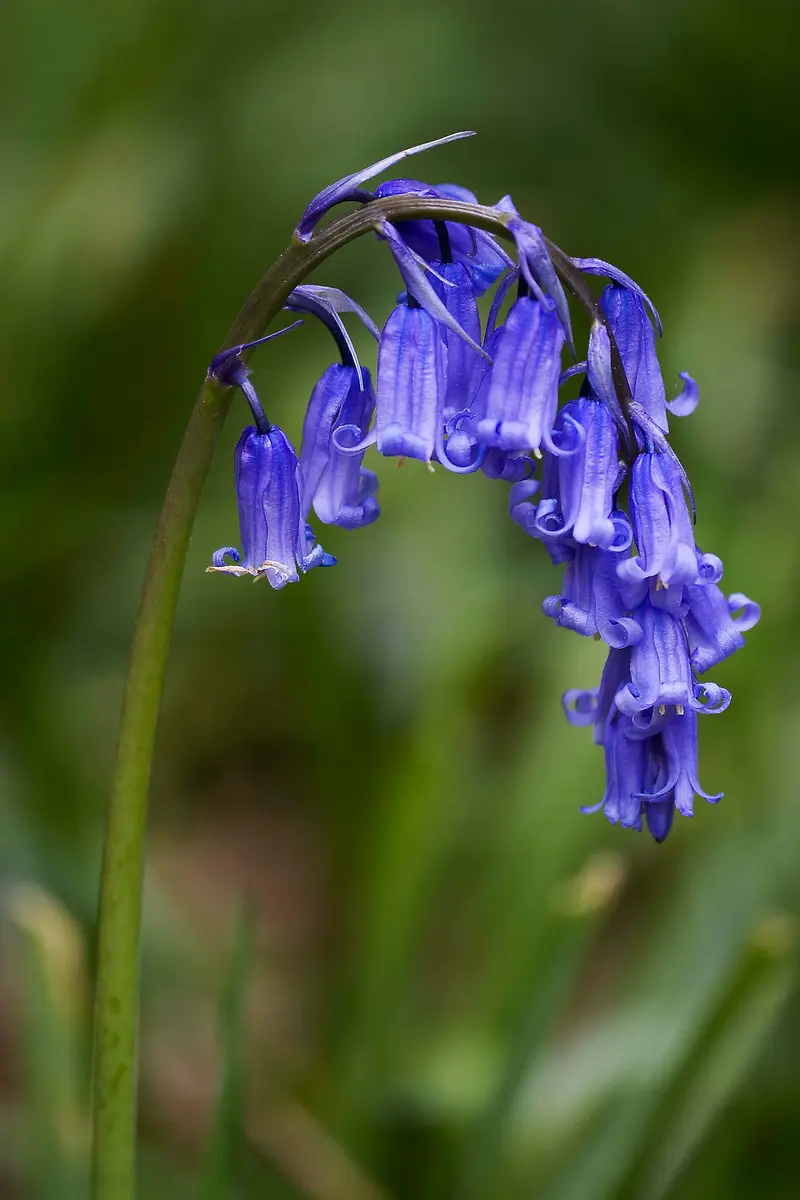
The English or common bluebell is a much-loved native British bulb, famous for carpeting ancient woodlands in spring with drifts of violet-blue. Britain holds a large share of the world's population, making it a plant of real conservation importance. Each bulb produces strap-shaped basal leaves and a gracefully nodding, one-sided spike of narrow, tubular, sweetly scented flowers whose tips curl strongly back; the pollen is creamy-white. It is a recognised indicator of long-established, undisturbed woodland.
It thrives in dappled shade on moist but well-drained, humus-rich soil, flowering in mid to late spring before the tree canopy closes over. The nectar-rich blooms are an important early resource for bumblebees, other bees and hoverflies. Bluebells are ideal for naturalising in woodland, shady borders and beneath hedgerows and trees. The native species can be threatened by hybridisation with the introduced Spanish bluebell, so genuine British-origin stock is well worth seeking out.
Also known as
Common or English Bluebell · English bluebell · Mountain Bluebell · Wild Hyacinth · common bluebell
Synonyms
Agraphis cernua · Agraphis cernua alba · Agraphis nutans · Endymion cernuus · Endymion lacaillei · Endymion non-scriptus · Endymion nutans · Endymion nutans lacaillei · Hyacinthoides non-scripta cernua · Hyacinthoides non-scripta lacaillei · Hyacinthoides non-scripta non-scripta · Hyacinthus belgicus
Beta — under active development. This catalogue is still being built and accuracy-checked. The information here (including plant identifications, British native status, soil and sun/shade preferences) is provided in good faith for general guidance only and may contain errors or omissions. It must not be relied upon on its own — please confirm details with us before making planting, specification, foraging or purchasing decisions, and never eat or medicinally use any plant based on this catalogue alone, as some species are toxic. To the extent permitted by law, Phoenix Amenity Supplies accepts no liability for any loss arising from use of this information.