
Heracleum sphondylium L.
Cow Parsnip
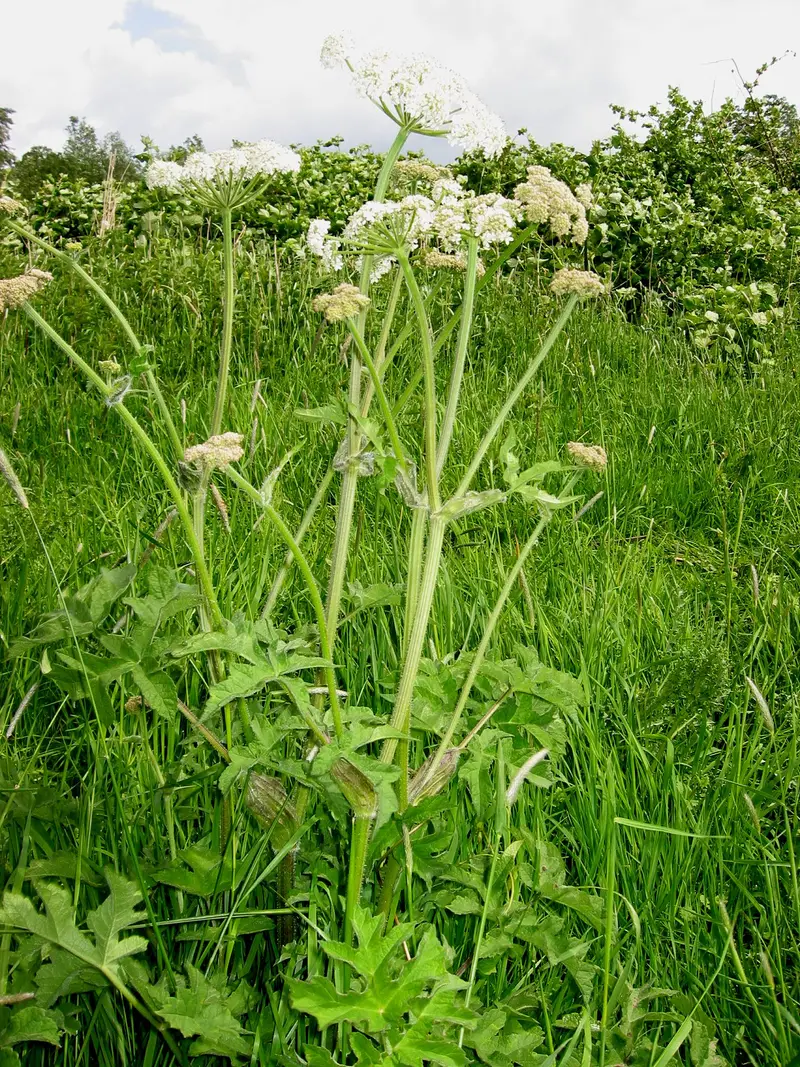
Common hogweed is a robust native British wildflower of the carrot family, a familiar sight in hedgerows, roadside verges, woodland edges, rough grassland and damp meadows across the country. Usually behaving as a biennial or short-lived perennial, it throws up a stout, ridged, bristly stem topped with broad, flat umbels of creamy-white flowers, the outer petals notably larger.
About
Common hogweed is a robust native British wildflower of the carrot family, a familiar sight in hedgerows, roadside verges, woodland edges, rough grassland and damp meadows across the country. Usually behaving as a biennial or short-lived perennial, it throws up a stout, ridged, bristly stem topped with broad, flat umbels of creamy-white flowers, the outer petals notably larger. Its coarse, lobed leaves and sturdy frame make it one of our most recognisable umbellifers. It should not be confused with the far taller, invasive giant hogweed.
Hogweed grows readily on most fertile soils in sun or light shade. Flowering from early summer well into autumn, its open flower heads are among the most valuable nectar and pollen sources in the British countryside, drawing huge numbers of beetles, flies, hoverflies, bees and wasps. It suits wildlife meadows, hedge bottoms and naturalistic schemes, though the sap can irritate skin in sunlight, so handle with care.
Also known as
Cow-parsnip · Eltrot · Eurasian cow parsnip · Eurasian cow-parsnip · Hogweed
Synonyms
Heracleum aestivum · Heracleum armoricum · Heracleum lecokii aurasiacum · Heracleum longifolium · Heracleum morifolium angustum · Pastinaca sphondylium sibiricum · Sphondylium proteiforme
Beta — under active development. This catalogue is still being built and accuracy-checked. The information here (including plant identifications, British native status, soil and sun/shade preferences) is provided in good faith for general guidance only and may contain errors or omissions. It must not be relied upon on its own — please confirm details with us before making planting, specification, foraging or purchasing decisions, and never eat or medicinally use any plant based on this catalogue alone, as some species are toxic. To the extent permitted by law, Phoenix Amenity Supplies accepts no liability for any loss arising from use of this information.