
Glaucium flavum Crantz
Horned-poppy
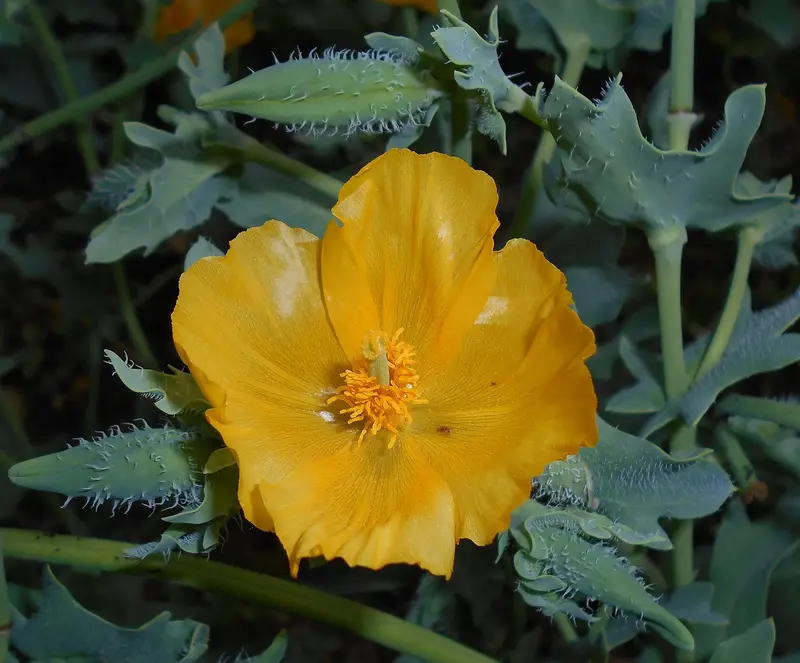
The yellow horned-poppy is a native coastal plant, found almost exclusively on shingle beaches, sand and the tops of sea cliffs around the British coast — it is essentially never seen inland. A biennial or short-lived perennial in the poppy family, it forms a rosette of thick, waxy, blue-grey lobed leaves that withstand salt and drought, above which rise branching stems bearing large, papery, golden-yellow flowers.
About
The yellow horned-poppy is a native coastal plant, found almost exclusively on shingle beaches, sand and the tops of sea cliffs around the British coast — it is essentially never seen inland. A biennial or short-lived perennial in the poppy family, it forms a rosette of thick, waxy, blue-grey lobed leaves that withstand salt and drought, above which rise branching stems bearing large, papery, golden-yellow flowers.
Flowering through the summer, from around June to September, it is followed by remarkably long, slender, curving seed capsules — the 'horns' that give the plant its name, which can reach some 30 cm. All parts contain a yellow sap and are poisonous. Tough and architectural, it is a fine choice for coastal and gravel gardens and for free-draining, sunny, low-fertility ground, though it dislikes rich soils and wet roots.
Also known as
Sea-poppy · Yellow Horned Poppy · Yellow Horned-poppy · Yellow Hornpoppy · sea poppy · yellow horned-poppy
Synonyms
Chelidonium corniculatum · Chelidonium fulvum · Chelidonium glaucium · Chelidonium glaucum · Chelidonium littorale · Glacium flavum · Glaucium corniculatum flavum · Glaucium corniculatum fulvum · Glaucium corniculatum grandiflorum · Glaucium corniculatum sublobatum · Glaucium corniculatum tricolor
Beta — under active development. This catalogue is still being built and accuracy-checked. The information here (including plant identifications, British native status, soil and sun/shade preferences) is provided in good faith for general guidance only and may contain errors or omissions. It must not be relied upon on its own — please confirm details with us before making planting, specification, foraging or purchasing decisions, and never eat or medicinally use any plant based on this catalogue alone, as some species are toxic. To the extent permitted by law, Phoenix Amenity Supplies accepts no liability for any loss arising from use of this information.