
Genista tinctoria L.
Dyer's Broom
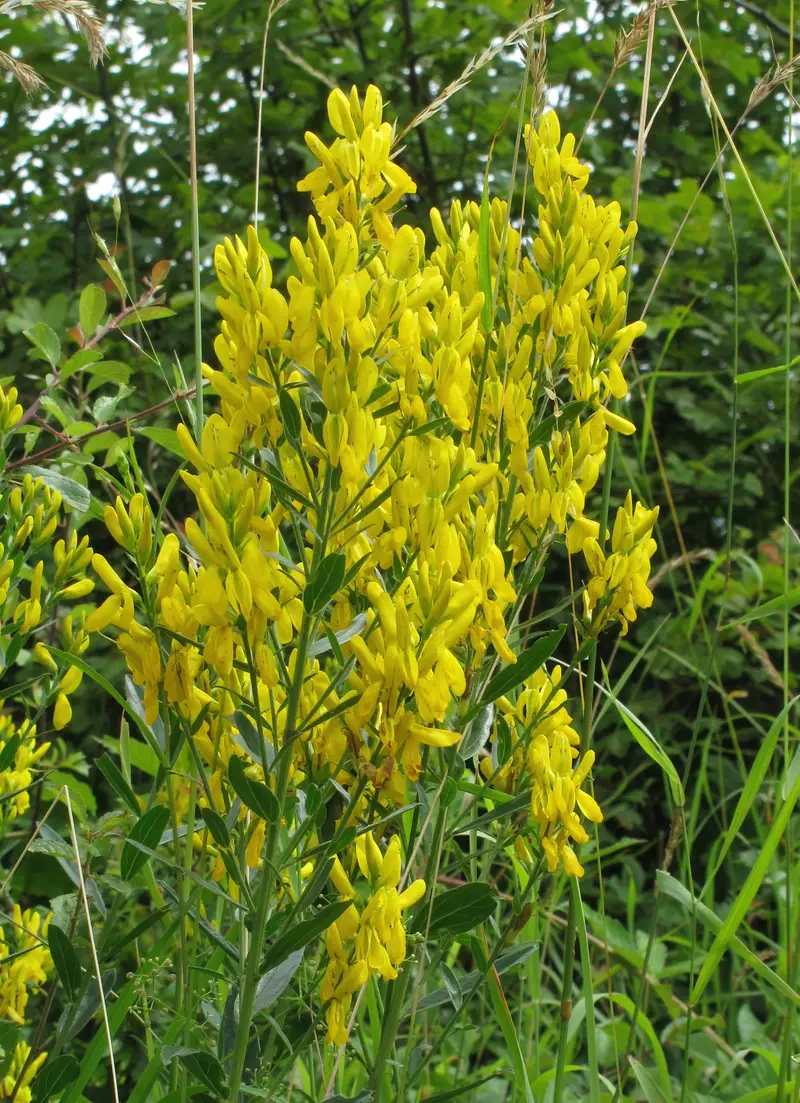
Dyer's greenweed is a low, native, deciduous shrub of the pea family, forming an upright, rounded bush of slender green stems and narrow, untoothed leaves. In summer it carries erect spikes of rich golden-yellow pea flowers, and as the old name suggests it has been used since early medieval times to produce a yellow dye for wool, which combined with woad gave green.
About
Dyer's greenweed is a low, native, deciduous shrub of the pea family, forming an upright, rounded bush of slender green stems and narrow, untoothed leaves. In summer it carries erect spikes of rich golden-yellow pea flowers, and as the old name suggests it has been used since early medieval times to produce a yellow dye for wool, which combined with woad gave green.
It grows in a range of grassy places, rough pastures, old meadows, heaths, verges and field margins, on heavy soils that range from calcareous to slightly acid, in sun. Found throughout England and Wales and more thinly in southern Scotland, it flowers from around June to August. As a legume it fixes nitrogen, and it is valuable to bees and other pollinators, while in Britain it is the sole larval foodplant of several rare and scarce moths. A fine, long-lived shrub for meadows, banks and conservation planting.
Also known as
Dyer's Greenweed · Dyer’s Greenweed · Woadwaxen · Woodwaxen · dyeweed
Synonyms
Corniola tinctoria · Cytisus tinctorius · Genista alpestris · Genista marginata · Genista perrymondii · Genista sibirica · Genista tenorei · Genista tinctoria oligosperma · Genista tinctoria tinctoria · Genistoides tinctoria · Spartium tinctorium
Beta — under active development. This catalogue is still being built and accuracy-checked. The information here (including plant identifications, British native status, soil and sun/shade preferences) is provided in good faith for general guidance only and may contain errors or omissions. It must not be relied upon on its own — please confirm details with us before making planting, specification, foraging or purchasing decisions, and never eat or medicinally use any plant based on this catalogue alone, as some species are toxic. To the extent permitted by law, Phoenix Amenity Supplies accepts no liability for any loss arising from use of this information.