
Erysimum cheiri (L.) Crantz
Aegean wallflower
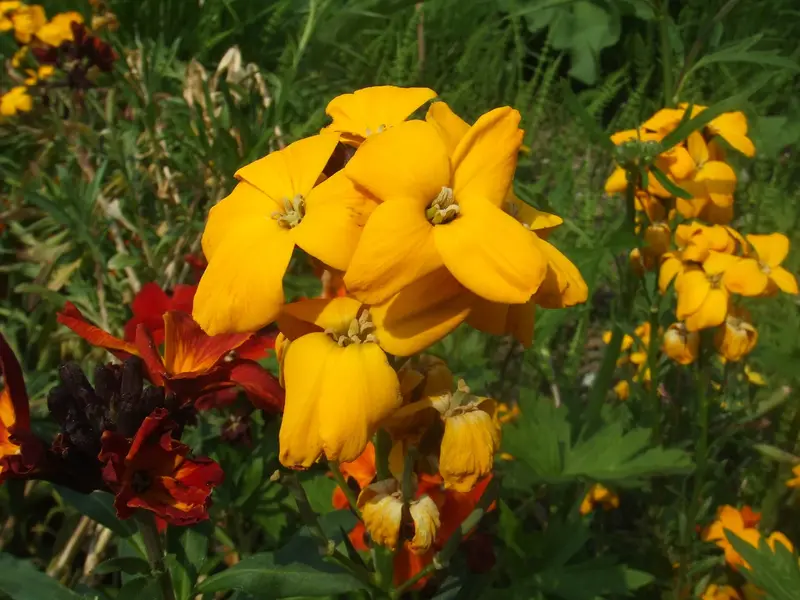
The wallflower is a much-loved cottage-garden plant, a short-lived perennial usually grown as a biennial and native to Greece and the eastern Mediterranean rather than to Britain. It forms low, woody-based clumps of narrow grey-green leaves topped by dense, club-shaped heads of four-petalled flowers in warm yellows, oranges, bronzes and deep reds, carrying a rich, sweet scent.
About
The wallflower is a much-loved cottage-garden plant, a short-lived perennial usually grown as a biennial and native to Greece and the eastern Mediterranean rather than to Britain. It forms low, woody-based clumps of narrow grey-green leaves topped by dense, club-shaped heads of four-petalled flowers in warm yellows, oranges, bronzes and deep reds, carrying a rich, sweet scent. The main display comes in spring, from around April into early summer.
In Britain it is widely cultivated and has naturalised on old walls, cliffs, ruins and rocky ground, mainly across the southern two-thirds of the country, becoming scarcer and more coastal further north. The nectar-rich, fragrant flowers are excellent early-season forage, drawing bees, bumblebees, butterflies and hoverflies when little else is in bloom. It belongs in borders, raised beds and wall plantings rather than native wildflower meadows, where it brings reliable scent and colour to the spring garden.
Also known as
Wallflower
Synonyms
Cheiranthus cheiri · Cheiranthus cheiri canescens · Cheiranthus cheiri ferrugineus · Cheiranthus cheiri flavescens · Cheiranthus cheiri fruticulosus · Cheiranthus cheiri glaucescens · Cheiranthus cheiri grandiflorus · Cheiranthus cheiri gynantherus · Cheiranthus fruticulosus · Cheiranthus helveticus · Cheiranthus muralis
Beta — under active development. This catalogue is still being built and accuracy-checked. The information here (including plant identifications, British native status, soil and sun/shade preferences) is provided in good faith for general guidance only and may contain errors or omissions. It must not be relied upon on its own — please confirm details with us before making planting, specification, foraging or purchasing decisions, and never eat or medicinally use any plant based on this catalogue alone, as some species are toxic. To the extent permitted by law, Phoenix Amenity Supplies accepts no liability for any loss arising from use of this information.