
Dipsacus pilosus L.
Shepherd's Rod
Small teasel is a native biennial of England and Wales, found chiefly in the lowlands of the southern half of England. In its first year it forms a rosette of leaves; in the second it throws up branched, sparsely prickly stems to around 1.2 to 1.5 metres.
About
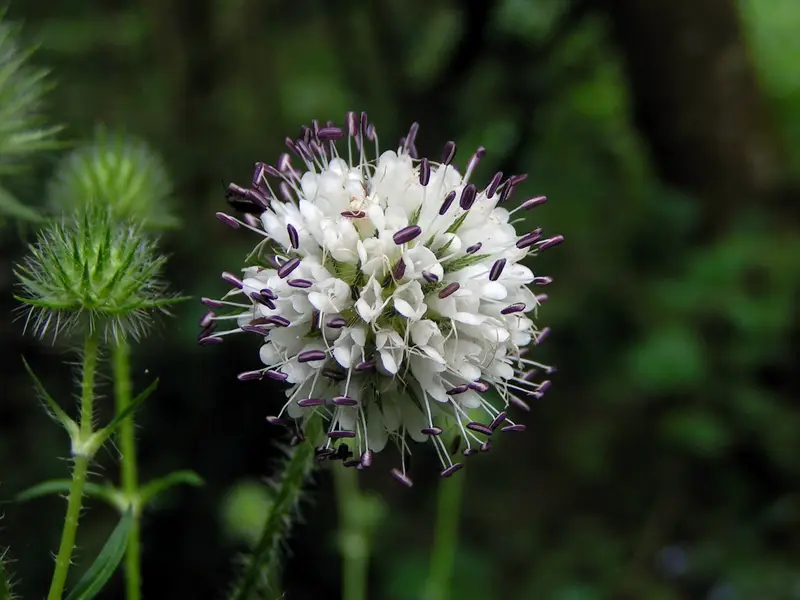
Small teasel is a native biennial of England and Wales, found chiefly in the lowlands of the southern half of England. In its first year it forms a rosette of leaves; in the second it throws up branched, sparsely prickly stems to around 1.2 to 1.5 metres. Unlike its familiar relative the common teasel, its flowerheads are small and almost spherical, packed with little white flowers set off by purple anthers and a ruff of bristly bracts. It favours damp, calcareous soils in partial shade, growing along woodland edges, rides and clearings, shady stream banks and damp hedgerows.
Flowering from July to September, the nectar-rich heads attract bees and other insects, while the seeds later feed birds. Because germination depends on disturbed ground, it can appear and vanish unpredictably. It suits woodland-edge and damp shady plantings, and adds architectural structure and wildlife value to naturalistic schemes on heavier, lime-rich soils.
Also known as
Small Teasel
Synonyms
Acaenops pilosus · Acaenops vulgaris · Cephalaria appendiculata · Cephalaria pilosa · Dipsacella pilosa · Dipsacella setigera · Dipsacus elongatus · Dipsacus minor · Galedragon pilosus · Trichocephalum pilosum
Beta — under active development. This catalogue is still being built and accuracy-checked. The information here (including plant identifications, British native status, soil and sun/shade preferences) is provided in good faith for general guidance only and may contain errors or omissions. It must not be relied upon on its own — please confirm details with us before making planting, specification, foraging or purchasing decisions, and never eat or medicinally use any plant based on this catalogue alone, as some species are toxic. To the extent permitted by law, Phoenix Amenity Supplies accepts no liability for any loss arising from use of this information.