
Dactylorhiza fuchsii (Druce) Soó
Common Spotted Orchid
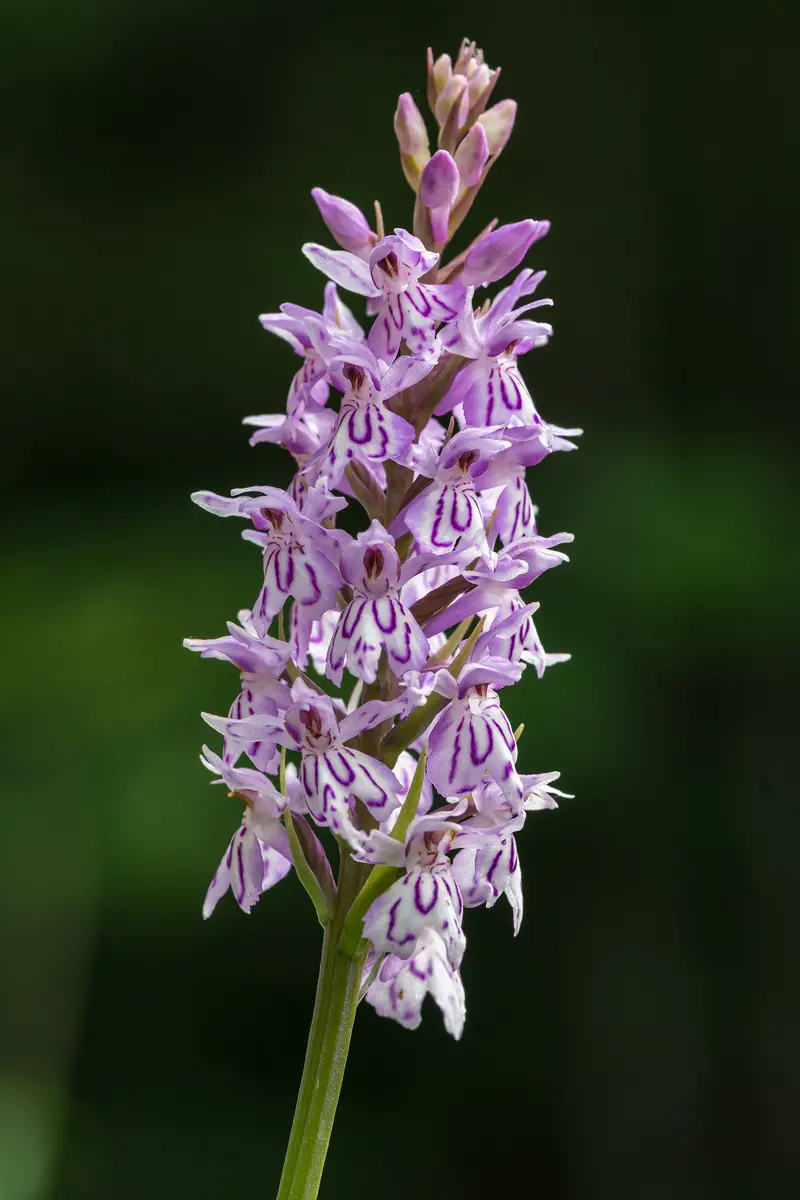
The common spotted-orchid is the most widespread of our native orchids, found across much of Britain in a remarkable range of habitats. Growing from tuberous roots to around 15-60cm, it forms a rosette of glossy green leaves usually marked with dark purplish blotches and spots, from which rises a sturdy stem bearing a dense, conical-to-cylindrical spike of many small flowers.
About
The common spotted-orchid is the most widespread of our native orchids, found across much of Britain in a remarkable range of habitats. Growing from tuberous roots to around 15-60cm, it forms a rosette of glossy green leaves usually marked with dark purplish blotches and spots, from which rises a sturdy stem bearing a dense, conical-to-cylindrical spike of many small flowers. These range from white and pale pink to lilac, each lip clearly three-lobed and patterned with fine darker loops and dots.
Flowering chiefly in June and into July, it is strikingly adaptable, growing in everything from dry chalk downland and meadows to damp marshes, fens, woodland rides and verges, and tolerating both sun and partial shade on neutral to lime-rich soils. The flowers attract a variety of insect pollinators. Its toughness and beauty make it the most reliable orchid for wildflower meadows and conservation grassland, where it can form impressive colonies once established.
Also known as
Common Spotted-orchid
Beta — under active development. This catalogue is still being built and accuracy-checked. The information here (including plant identifications, British native status, soil and sun/shade preferences) is provided in good faith for general guidance only and may contain errors or omissions. It must not be relied upon on its own — please confirm details with us before making planting, specification, foraging or purchasing decisions, and never eat or medicinally use any plant based on this catalogue alone, as some species are toxic. To the extent permitted by law, Phoenix Amenity Supplies accepts no liability for any loss arising from use of this information.