
Crambe maritima L.
Sea Kale
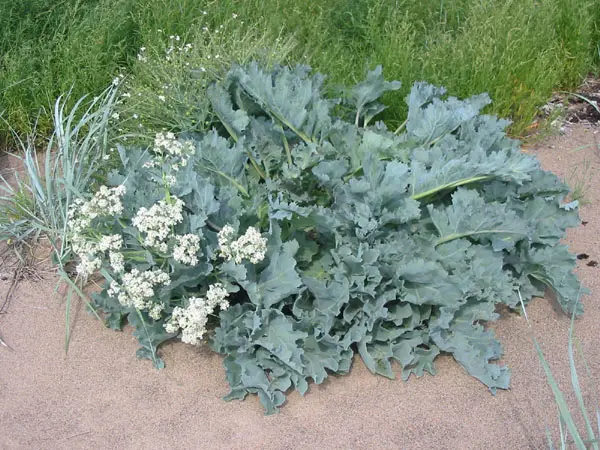
Sea kale is a striking native coastal perennial and a true salt-tolerant plant, building a broad, billowing mound of large, fleshy, blue-grey leaves that are crinkled, waxy and cabbage-like. In June and July it is smothered in great domed clouds of small, honey-scented white flowers, each with four petals, followed by rounded seed capsules.
About
Sea kale is a striking native coastal perennial and a true salt-tolerant plant, building a broad, billowing mound of large, fleshy, blue-grey leaves that are crinkled, waxy and cabbage-like. In June and July it is smothered in great domed clouds of small, honey-scented white flowers, each with four petals, followed by rounded seed capsules. Mature plants reach around 75cm tall and spread wider still, making a bold architectural shape on the shore.
Its natural home is vegetated shingle and sand above the tide line on coasts around Britain and mainland Europe, where it grows alongside yellow horned-poppy and curled dock. The fragrant blooms draw bees and other insects. Historically the blanched young shoots were grown and eaten as a spring vegetable. Rather than a meadow plant, it is ideal for coastal, gravel and dry sunny gardens that mimic its free-draining, salt-laden habitat, and it deserves respect where it grows wild.
Also known as
Sea-kale · Seakale
Synonyms
Cakile pontica · Caulis maritimus · Cochlearia maritima · Crambe gigantea · Crambe maritima occidentalis · Crambe pontica · Crambe suecia · Crambe suecica · Crucifera maritima
Beta — under active development. This catalogue is still being built and accuracy-checked. The information here (including plant identifications, British native status, soil and sun/shade preferences) is provided in good faith for general guidance only and may contain errors or omissions. It must not be relied upon on its own — please confirm details with us before making planting, specification, foraging or purchasing decisions, and never eat or medicinally use any plant based on this catalogue alone, as some species are toxic. To the extent permitted by law, Phoenix Amenity Supplies accepts no liability for any loss arising from use of this information.