
Convolvulus arvensis L.
Bindweed
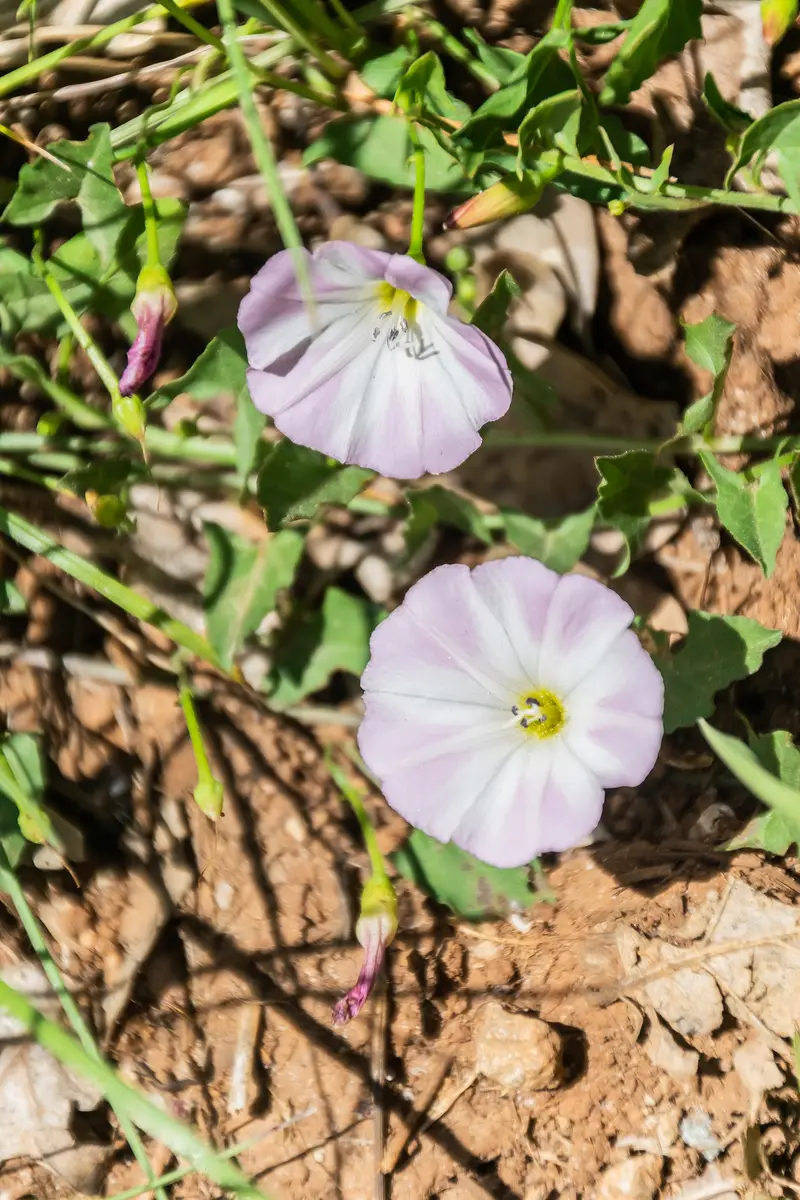
Field bindweed is a native perennial with a deserved reputation for tenacity. From a deep, far-creeping root system it throws up slender twining stems that trail over the ground or wind anticlockwise up any support, bearing arrow-shaped leaves.
About
Field bindweed is a native perennial with a deserved reputation for tenacity. From a deep, far-creeping root system it throws up slender twining stems that trail over the ground or wind anticlockwise up any support, bearing arrow-shaped leaves. The funnel-shaped flowers are pretty and fragrant, white to soft pink, often striped, and close in dull weather or by evening.
It is found throughout Britain on disturbed and cultivated ground, arable fields, roadsides, gardens and waste places, favouring sunny spots and well-drained soils. Blooming from June to September, the flowers are visited by bees and hoverflies and the foliage feeds various moths. While genuinely native and valuable to insects, it spreads aggressively from root fragments and rhizomes, so it is best appreciated in the wider countryside rather than introduced to borders or meadow mixes, where it quickly becomes an intractable weed.
Also known as
Common Bindweed · Creeping Jenny · European Bindweed · European morning glory · Field Bindweed
Synonyms
Cissampelos helxinioides · Convolvulus ambigens · Convolvulus arvensis alvarensis · Convolvulus arvensis arvensis · Convolvulus arvensis auriculatus · Convolvulus arvensis ciliaris · Convolvulus arvensis cordifolius · Convolvulus arvensis decarrhabdotus · Convolvulus arvensis decemvulnerus · Convolvulus arvensis notatus · Convolvulus arvensis pallidinotatus · Convolvulus arvensis pallidiroseus
Beta — under active development. This catalogue is still being built and accuracy-checked. The information here (including plant identifications, British native status, soil and sun/shade preferences) is provided in good faith for general guidance only and may contain errors or omissions. It must not be relied upon on its own — please confirm details with us before making planting, specification, foraging or purchasing decisions, and never eat or medicinally use any plant based on this catalogue alone, as some species are toxic. To the extent permitted by law, Phoenix Amenity Supplies accepts no liability for any loss arising from use of this information.