
Conopodium majus (Gouan) Loret
Pignut
Pignut is a delicate native perennial of the carrot family, found in open woodland, hedge banks, rough grassland and old, unimproved meadows, where it serves as an indicator of long-established grassland. It is fairly common across much of Britain, though scarce in East Anglia.
About
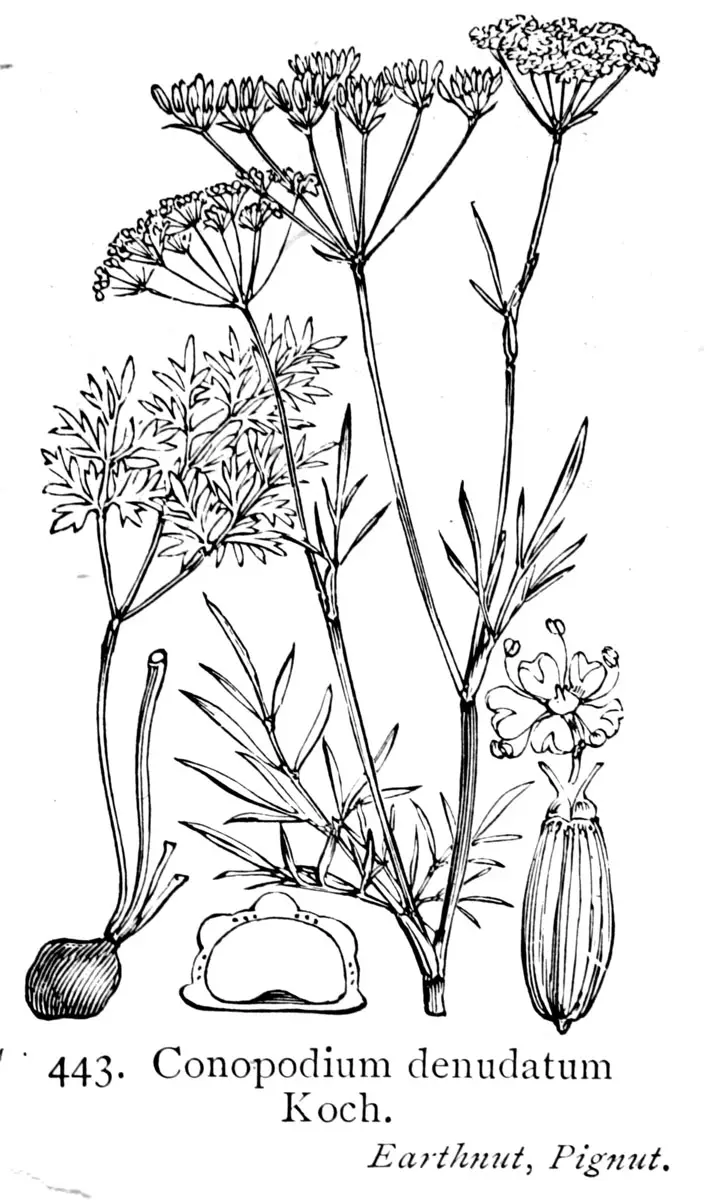
Pignut is a delicate native perennial of the carrot family, found in open woodland, hedge banks, rough grassland and old, unimproved meadows, where it serves as an indicator of long-established grassland. It is fairly common across much of Britain, though scarce in East Anglia. Slender and unassuming, it grows to around 40cm, with finely cut, almost thread-like leaves and dainty umbels of small white flowers held on smooth, wiry stems. Below ground it produces a small, rounded, edible tuber with a nutty, hazelnut-like flavour, long sought out and dug up as a wild snack.
Flowering from May into July, with the main display in late spring and early summer, it offers nectar and pollen to a range of insects, including hoverflies and soldier beetles. Pignut has declined with the loss and improvement of old grassland, which makes it a worthwhile component of meadow restoration and naturalistic woodland-edge planting on the right, undisturbed soils.
Also known as
earthnut
Synonyms
Bunium bulbocastanum · Bunium flexuosum · Carum flexuosum
Beta — under active development. This catalogue is still being built and accuracy-checked. The information here (including plant identifications, British native status, soil and sun/shade preferences) is provided in good faith for general guidance only and may contain errors or omissions. It must not be relied upon on its own — please confirm details with us before making planting, specification, foraging or purchasing decisions, and never eat or medicinally use any plant based on this catalogue alone, as some species are toxic. To the extent permitted by law, Phoenix Amenity Supplies accepts no liability for any loss arising from use of this information.