
Cirsium eriophorum (L.) Scop.
Woolly Thistle
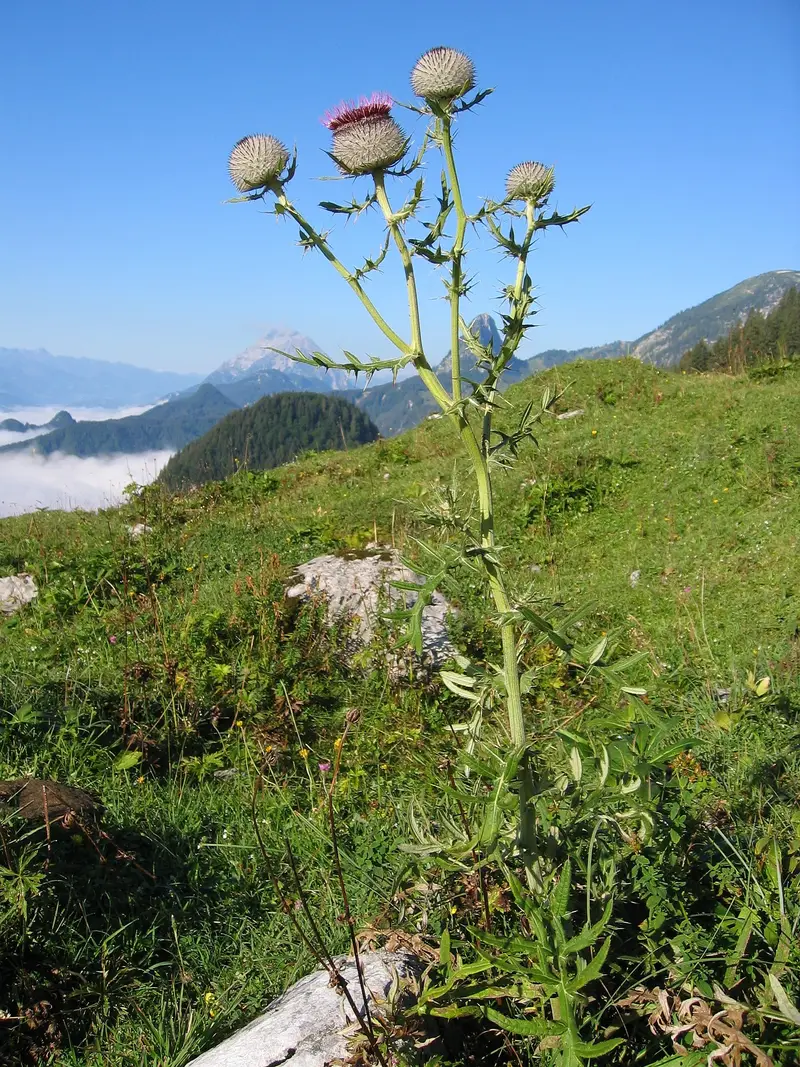
Woolly thistle is one of our most imposing native thistles, a stout biennial (strictly monocarpic) that spends its first year as a broad rosette before sending up a branched, cottony stem to roughly 50-150cm. Its great glory is the flowerhead: large and almost globe-shaped, wrapped in a dense web of white woolly hairs, and topped with a brush of rich red-purple florets.
About
Woolly thistle is one of our most imposing native thistles, a stout biennial (strictly monocarpic) that spends its first year as a broad rosette before sending up a branched, cottony stem to roughly 50-150cm. Its great glory is the flowerhead: large and almost globe-shaped, wrapped in a dense web of white woolly hairs, and topped with a brush of rich red-purple florets. The deeply cut leaves are armed with sharp spines, so it is a plant to admire rather than handle.
In Britain it is largely a plant of central and southern England, favouring dry, sunny grassland, scrub edges, road verges and railway banks on chalk, limestone and lime-rich clay. The big nectar-laden heads flower from July into September and are a magnet for bumblebees and butterflies, while the seeds later feed goldfinches and other birds. It is a striking choice for the back of a calcareous meadow or naturalistic border where there is room for its bold architecture.
Beta — under active development. This catalogue is still being built and accuracy-checked. The information here (including plant identifications, British native status, soil and sun/shade preferences) is provided in good faith for general guidance only and may contain errors or omissions. It must not be relied upon on its own — please confirm details with us before making planting, specification, foraging or purchasing decisions, and never eat or medicinally use any plant based on this catalogue alone, as some species are toxic. To the extent permitted by law, Phoenix Amenity Supplies accepts no liability for any loss arising from use of this information.