
Cheiranthus cheiri L.
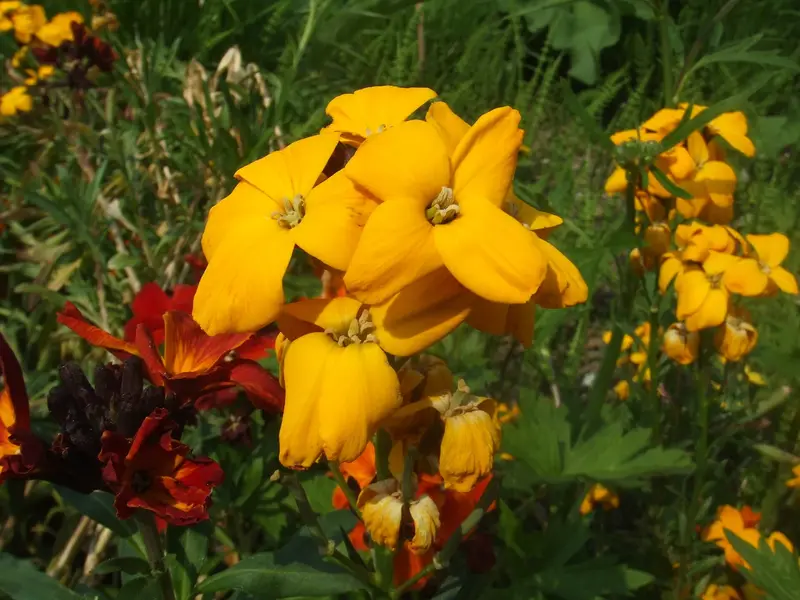
The wallflower, now usually classified as Erysimum cheiri, is a short-lived perennial of the cabbage family, most often grown as a biennial for spring bedding. It produces bushy stems of narrow, deep-green leaves topped by clustered, four-petalled flowers in warm shades of yellow, orange, red and bronze, prized above all for their rich, sweet fragrance.
About
The wallflower, now usually classified as Erysimum cheiri, is a short-lived perennial of the cabbage family, most often grown as a biennial for spring bedding. It produces bushy stems of narrow, deep-green leaves topped by clustered, four-petalled flowers in warm shades of yellow, orange, red and bronze, prized above all for their rich, sweet fragrance. Originally from the eastern Mediterranean, it has long been cultivated in Britain and is widely naturalised, famously colonising old walls, ruins and stony banks.
It does best in full sun on free-draining, alkaline to neutral soil, tolerating the lean, dry conditions of masonry and rubble. Flowering chiefly from spring into early summer, its scented blooms are a valuable early source of nectar for bees and other insects emerging in the cooler months. A mainstay of cottage borders and spring displays, it combines well with tulips and other bulbs, though it is a garden and naturalised plant rather than a true native.
In our seed mixes
Beta — under active development. This catalogue is still being built and accuracy-checked. The information here (including plant identifications, British native status, soil and sun/shade preferences) is provided in good faith for general guidance only and may contain errors or omissions. It must not be relied upon on its own — please confirm details with us before making planting, specification, foraging or purchasing decisions, and never eat or medicinally use any plant based on this catalogue alone, as some species are toxic. To the extent permitted by law, Phoenix Amenity Supplies accepts no liability for any loss arising from use of this information.