
Cerastium fontanum Baumg.
Common Chickweed
Common mouse-ear is one of Britain's most widespread native plants, a tufted or mat-forming perennial found in grassland almost everywhere. It takes its name from its small, blunt, hairy leaves, which are said to resemble a mouse's ear, borne in opposite pairs along trailing and ascending stems.
About
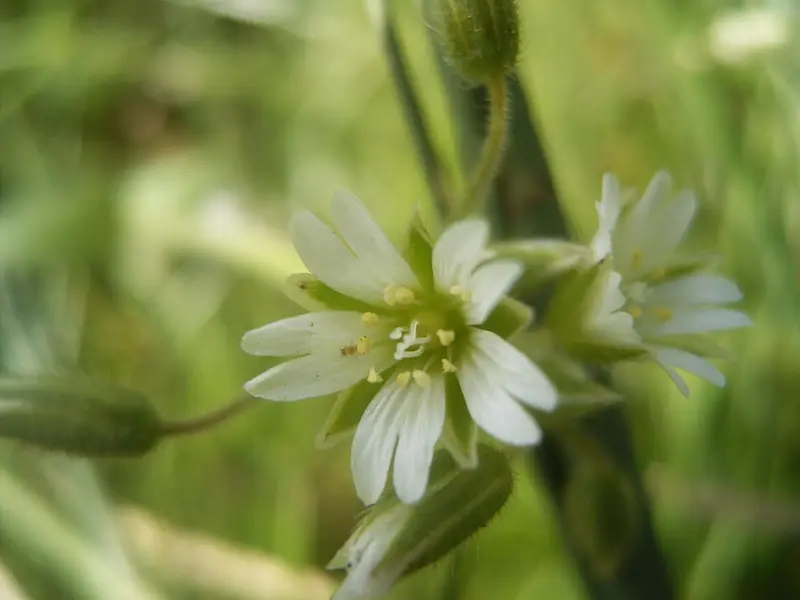
Common mouse-ear is one of Britain's most widespread native plants, a tufted or mat-forming perennial found in grassland almost everywhere. It takes its name from its small, blunt, hairy leaves, which are said to resemble a mouse's ear, borne in opposite pairs along trailing and ascending stems. The plant typically reaches only 10 to 40cm and spreads along the ground, rooting where the stems touch down. Its modest flowers are white, with five deeply notched petals that give each bloom the look of having ten.
It is almost ubiquitous in cut, grazed and managed grassland, along roadsides, on lawns and in waste places, on a wide range of soils. With a very long flowering season, roughly April to November, it offers steady, if understated, value to small bees and flies. Rarely sown deliberately, it nonetheless turns up readily in meadows and lawns and is a familiar, resilient component of British grassland.
Also known as
Common Mouse Ear · Common Mouse-ear · Common Mouse-ear Chickweed · Mouse-ear Chickweed · mouse-eared chickweed
Synonyms
Cerastium holosteoides glandulosum · Cerastium lucorum · Cerastium triviale alpinum
Beta — under active development. This catalogue is still being built and accuracy-checked. The information here (including plant identifications, British native status, soil and sun/shade preferences) is provided in good faith for general guidance only and may contain errors or omissions. It must not be relied upon on its own — please confirm details with us before making planting, specification, foraging or purchasing decisions, and never eat or medicinally use any plant based on this catalogue alone, as some species are toxic. To the extent permitted by law, Phoenix Amenity Supplies accepts no liability for any loss arising from use of this information.