
Campanula trachelium L.
Bats In The Belfry
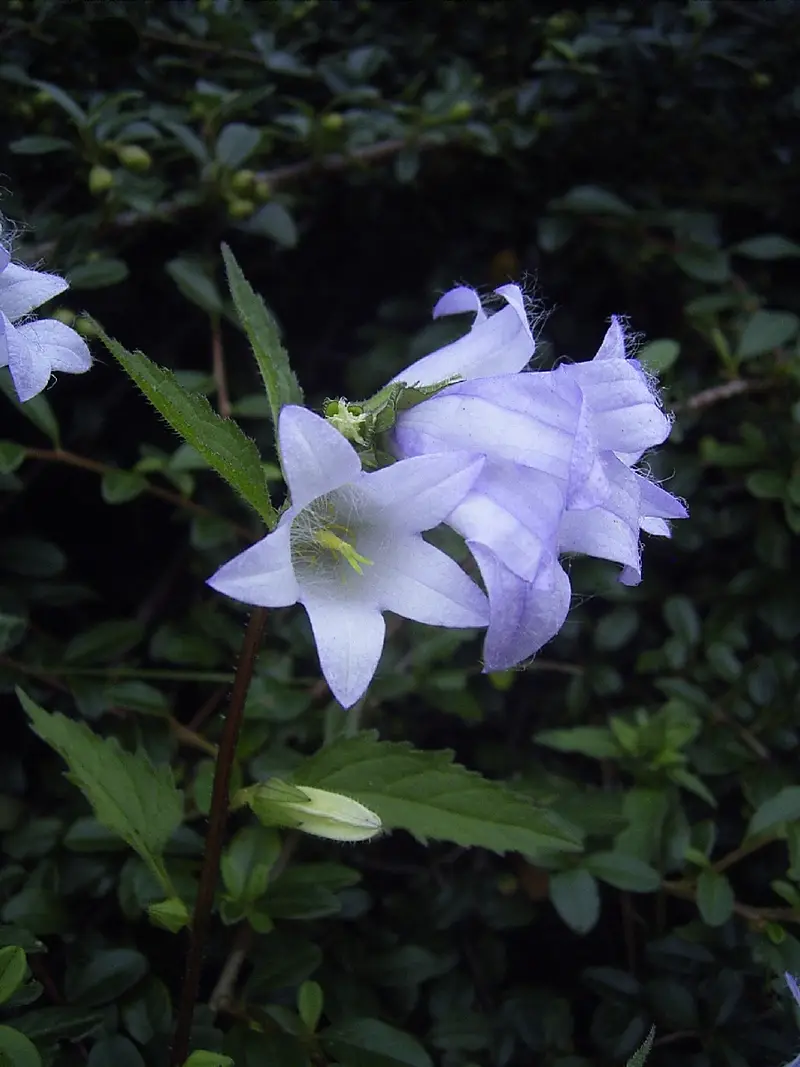
Nettle-leaved bellflower is a robust native perennial named for its coarse, sharply toothed leaves, which closely resemble those of a stinging nettle but lack the sting. From upright stems it produces clusters of large, bell-shaped flowers that are white in bud and open to a rich blue-purple.
About
Nettle-leaved bellflower is a robust native perennial named for its coarse, sharply toothed leaves, which closely resemble those of a stinging nettle but lack the sting. From upright stems it produces clusters of large, bell-shaped flowers that are white in bud and open to a rich blue-purple. The whimsical old name bats-in-the-belfry captures the way the dangling blooms crowd the top of the stem.
It is a plant of dry, lime-rich soils, growing along woodland edges, in scrub, on hedge banks and in coppiced woodland where it benefits from dappled shade and disturbance. Though native, it has become uncommon and is now largely confined to southern and eastern England, partly through the loss of old hedgerows. Flowering in mid- to late summer, its generous bells are well suited to long-tongued bumblebees, making it a rewarding addition to shaded borders, woodland-edge plantings and hedgerow restoration.
Also known as
Bats-in-the-belfrey · Nettle Leaved Bellflower · Nettle-leaf Bellflower · Nettle-leaved Bellflower · Throatwort · bats-in-the-belfry
Synonyms
Campanula serratifolia ciliatosepala · Campanula trachelium parviflora · Campanula trachelium urticifolia · Campanula urticifolia · Drymocodon trachelium · Trachelioides vulgaris · Trachelodes vulgaris
In our seed mixes
Beta — under active development. This catalogue is still being built and accuracy-checked. The information here (including plant identifications, British native status, soil and sun/shade preferences) is provided in good faith for general guidance only and may contain errors or omissions. It must not be relied upon on its own — please confirm details with us before making planting, specification, foraging or purchasing decisions, and never eat or medicinally use any plant based on this catalogue alone, as some species are toxic. To the extent permitted by law, Phoenix Amenity Supplies accepts no liability for any loss arising from use of this information.