
Calendula officinalis L.
Calendula
Pot marigold is a cheerful, easily grown member of the daisy family, usually treated as a hardy annual. It is a cultivated plant rather than a British native, thought to come originally from southern Europe and the Mediterranean region, though its long history in gardens has blurred its exact origins and it is now widely naturalised.
About
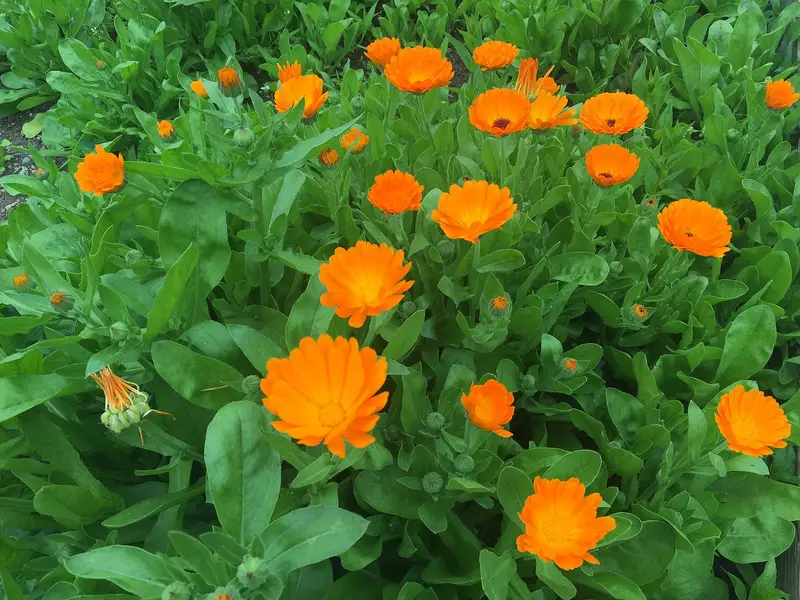
Pot marigold is a cheerful, easily grown member of the daisy family, usually treated as a hardy annual. It is a cultivated plant rather than a British native, thought to come originally from southern Europe and the Mediterranean region, though its long history in gardens has blurred its exact origins and it is now widely naturalised. It forms a branching, slightly sticky and aromatic plant carrying single or double daisy flowers in warm shades of yellow, gold, orange and apricot.
Grown in sun on most ordinary, well-drained soils, it flowers prolifically and over a long season from early summer onward, especially if regularly dead-headed, and it self-seeds readily. The open flowers are popular with bees, hoverflies and other beneficial insects, which makes it a useful companion plant in the vegetable garden. The petals are edible and have a long history of use as a culinary garnish and in herbal preparations.
Also known as
Garden-marigold · Marigold · Pot Marigold · Ruddles · Scotch marigold · Scotch-marigold · Scottish-marigold · garden marigold · pot-marigold
Synonyms
Calendula arvensis hydruntina · Calendula aurantiaca · Calendula eriocarpa · Calendula hydruntina · Calendula officinalis isabellina · Calendula officinalis ligulata · Calendula officinalis lingulata · Calendula officinalis pallida · Calendula officinalis pleniflora · Calendula officinalis ranunculodes · Calendula officinalis regalis
In our seed mixes
Beta — under active development. This catalogue is still being built and accuracy-checked. The information here (including plant identifications, British native status, soil and sun/shade preferences) is provided in good faith for general guidance only and may contain errors or omissions. It must not be relied upon on its own — please confirm details with us before making planting, specification, foraging or purchasing decisions, and never eat or medicinally use any plant based on this catalogue alone, as some species are toxic. To the extent permitted by law, Phoenix Amenity Supplies accepts no liability for any loss arising from use of this information.