
Buglossoides arvensis (L.) I.M.Johnst.
Corn Gromwell
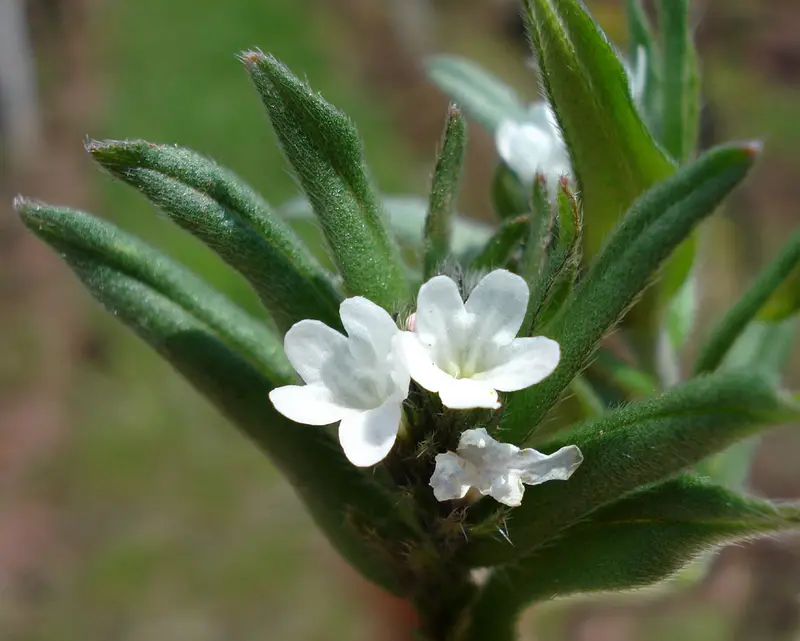
Field gromwell, also called corn gromwell, is a slender, roughly hairy annual of the borage family, growing upright to around 10-50cm with narrow, untidy leaves. Unlike its blue-flowered relatives, it bears small, modest funnel-shaped flowers that are creamy-white, sometimes faintly bluish or violet-tinged, followed by hard, warty, stone-like nutlets that give the gromwells their name.
About
Field gromwell, also called corn gromwell, is a slender, roughly hairy annual of the borage family, growing upright to around 10-50cm with narrow, untidy leaves. Unlike its blue-flowered relatives, it bears small, modest funnel-shaped flowers that are creamy-white, sometimes faintly bluish or violet-tinged, followed by hard, warty, stone-like nutlets that give the gromwells their name.
In Britain it is an archaeophyte, an ancient introduction that has grown as an arable weed since at least the Bronze Age, favouring light, dry, well-drained, often calcareous soils. It is a plant of cultivated fields and occasionally waste and disturbed ground, where its short-lived seed depends on regular soil disturbance to persist. Once widespread, it has declined sharply since the mid-twentieth century with agricultural intensification and is now a scarce arable plant in many districts. Flowering from around May to July, it is a worthwhile component of cornfield annual and arable-conservation mixes on the lighter, lime-rich soils it prefers.
Also known as
Field Gromwell · Gromwell · Ironweed · Pigeonweed · Sheepweed
Synonyms
Lithospermum arvense arvense · Lithospermum arvense caerulescens · Lithospermum arvense caeruleum · Lithospermum sylvestre
Beta — under active development. This catalogue is still being built and accuracy-checked. The information here (including plant identifications, British native status, soil and sun/shade preferences) is provided in good faith for general guidance only and may contain errors or omissions. It must not be relied upon on its own — please confirm details with us before making planting, specification, foraging or purchasing decisions, and never eat or medicinally use any plant based on this catalogue alone, as some species are toxic. To the extent permitted by law, Phoenix Amenity Supplies accepts no liability for any loss arising from use of this information.