
Briza maxima L.
Big quakinggrass
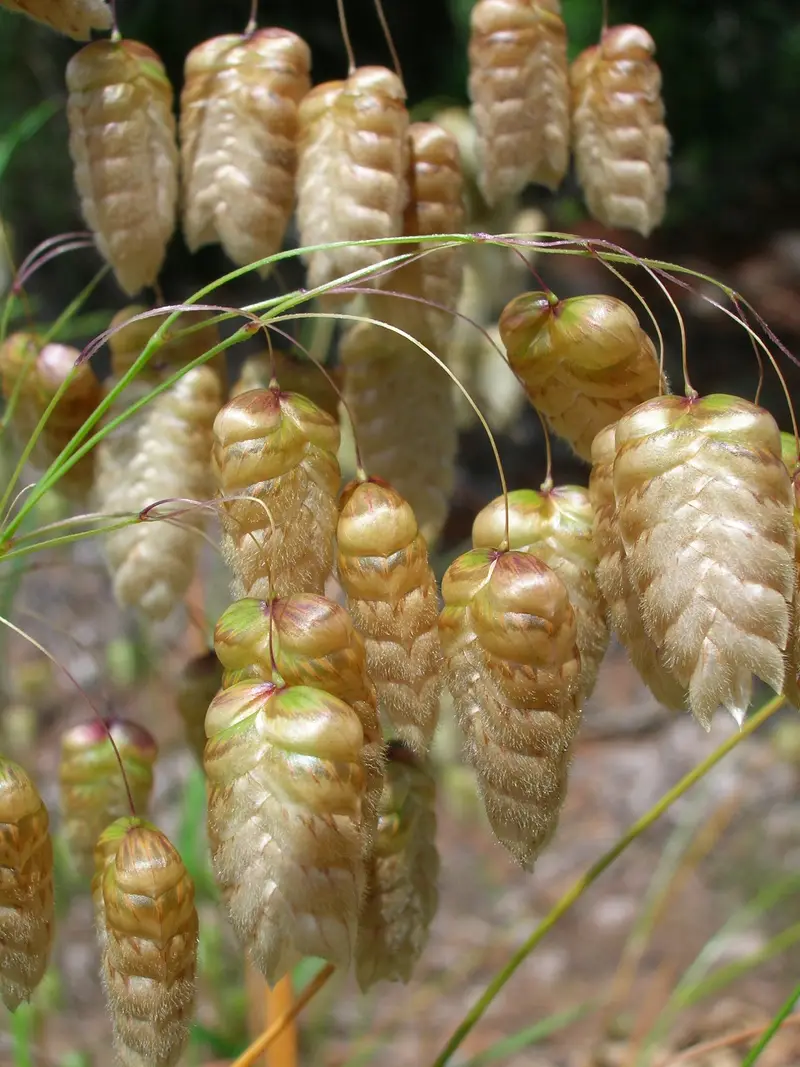
Greater quaking grass is an annual grass of Mediterranean and North African origin, not a British native, though it has long been grown in gardens and is now naturalised and spreading in parts of southern England, Wales and the Channel Islands. It forms slender, upright tufts and is grown above all for its flowerheads: large, plump, heart-shaped spikelets that dangle on fine, thread-like stalks and tremble in the slightest breeze, ripening from green, often tinged purple, to a papery straw colour.
About
Greater quaking grass is an annual grass of Mediterranean and North African origin, not a British native, though it has long been grown in gardens and is now naturalised and spreading in parts of southern England, Wales and the Channel Islands. It forms slender, upright tufts and is grown above all for its flowerheads: large, plump, heart-shaped spikelets that dangle on fine, thread-like stalks and tremble in the slightest breeze, ripening from green, often tinged purple, to a papery straw colour.
In the wild here it turns up on dry, bare and disturbed ground such as banks, field edges, sandy places and waste ground, favouring light, well-drained soils in full sun. It is chiefly an ornamental and cut-flower grass, popular fresh or dried for its decorative seedheads, rather than a meadow or amenity component. Because it is a non-native annual, it is best used deliberately in beds and containers rather than sown into native grassland.
Also known as
Giant Quaking Grass · Greater Quaking-grass · Shaky Grass · big quaking grass · blowfly grass · great quaking grass · greater quaking grass · large quaking grass · quaking grass
Synonyms
Briza capensis · Briza dalmatica · Briza gracilescens · Briza grandis · Briza major · Briza maxima concolor · Briza maxima discolor · Briza maxima fusca · Briza maxima glabriflora · Briza maxima hirsuta · Briza maxima rubra · Briza maxima unicolor
In our seed mixes
Beta — under active development. This catalogue is still being built and accuracy-checked. The information here (including plant identifications, British native status, soil and sun/shade preferences) is provided in good faith for general guidance only and may contain errors or omissions. It must not be relied upon on its own — please confirm details with us before making planting, specification, foraging or purchasing decisions, and never eat or medicinally use any plant based on this catalogue alone, as some species are toxic. To the extent permitted by law, Phoenix Amenity Supplies accepts no liability for any loss arising from use of this information.