
Anthriscus sylvestris (L.) Hoffm.
Bur Chervil
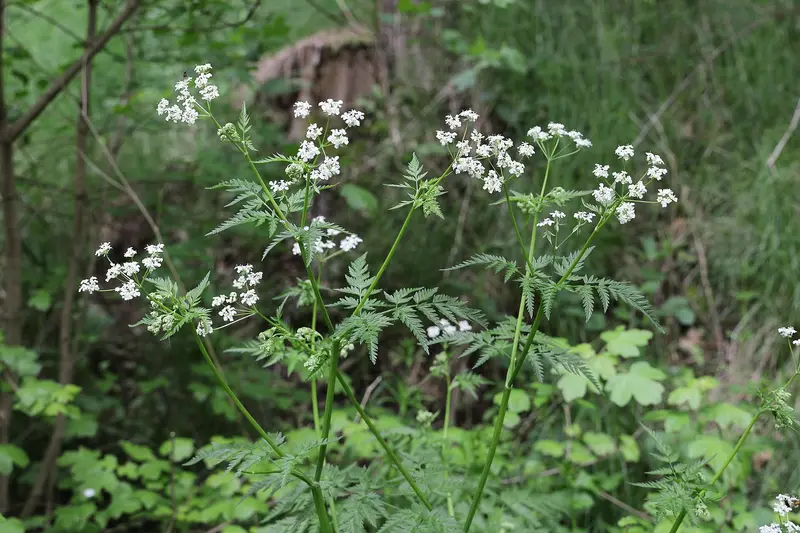
Cow parsley is one of Britain's most familiar native plants, the frothy white umbellifer that lines hedgerows, road verges, woodland edges and meadows in late spring. A biennial or short-lived perennial, it forms mounds of soft, ferny, much-divided foliage from which hollow, ridged stems rise to anywhere from about 60cm to over 1.5 metres, carrying broad, lacy umbels of small white flowers.
About
Cow parsley is one of Britain's most familiar native plants, the frothy white umbellifer that lines hedgerows, road verges, woodland edges and meadows in late spring. A biennial or short-lived perennial, it forms mounds of soft, ferny, much-divided foliage from which hollow, ridged stems rise to anywhere from about 60cm to over 1.5 metres, carrying broad, lacy umbels of small white flowers. Its abundance and timing make it a defining feature of the British countryside in May.
Flowering mainly from April to June, it is an important early source of pollen and nectar, drawing bees, hoverflies and many other insects, while the foliage shelters numerous invertebrates. In gardens and larger plantings it brings a relaxed, naturalistic softness to hedge bases, verges and the wilder edges of borders and meadows. It self-seeds readily and can spread vigorously, so it is best given room in informal and wildlife-focused settings rather than tidy beds.
Also known as
Cow Parsley · Keck · Kecks · Queen Anne's lace · Wild Chervil
Synonyms
Anthriscus nemorosus glabriusculus · Anthriscus sylvestris sylvestris · Anthriscus sylvestris torquata · Anthriscus torquata · Cicutaria vulgaris · Myrrhodes sylvestre
Beta — under active development. This catalogue is still being built and accuracy-checked. The information here (including plant identifications, British native status, soil and sun/shade preferences) is provided in good faith for general guidance only and may contain errors or omissions. It must not be relied upon on its own — please confirm details with us before making planting, specification, foraging or purchasing decisions, and never eat or medicinally use any plant based on this catalogue alone, as some species are toxic. To the extent permitted by law, Phoenix Amenity Supplies accepts no liability for any loss arising from use of this information.