
Anacamptis pyramidalis (L.) Rich.
Pyramidal Orchid
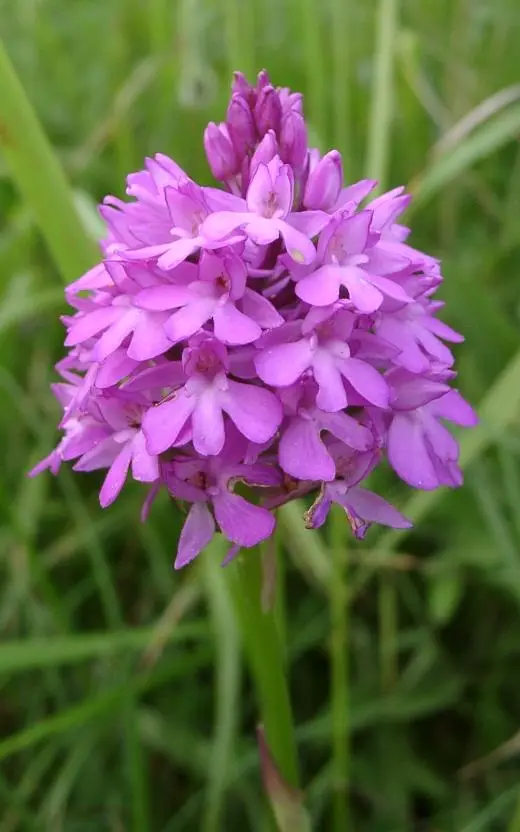
The pyramidal orchid is a native perennial orchid and one of the highlights of unimproved chalk and limestone grassland. Emerging from underground tubers, it sends up a slender stem, typically 20-50cm tall, topped in its early stages by a neat, conical spike that gives the plant its name; as more of the densely packed flowers open, the head rounds out.
About
The pyramidal orchid is a native perennial orchid and one of the highlights of unimproved chalk and limestone grassland. Emerging from underground tubers, it sends up a slender stem, typically 20-50cm tall, topped in its early stages by a neat, conical spike that gives the plant its name; as more of the densely packed flowers open, the head rounds out. The blooms are a vivid pink to magenta, each with a three-lobed lip and a long, slender nectar spur, set above narrow, greyish-green leaves.
It flowers from June into July on dry, lime-rich soils, favouring downland, old quarries, dunes, road verges and railway embankments, mainly in England and Wales and scarcer in Scotland. The long-spurred flowers are pollinated by day-flying butterflies and moths, whose tongues reach the hidden nectar. A classic indicator of species-rich grassland, it is prized in calcareous wildflower meadows and conservation sward, though, like all orchids, it depends on undisturbed soil and beneficial fungi.
Synonyms
Aceras pyramidale · Aceras pyramidalis · Aceras pyramidalis brachystachys · Anacamptis pyramidalis albiflora · Anacamptis pyramidalis brachystachys · Orchis pyramidalis
Beta — under active development. This catalogue is still being built and accuracy-checked. The information here (including plant identifications, British native status, soil and sun/shade preferences) is provided in good faith for general guidance only and may contain errors or omissions. It must not be relied upon on its own — please confirm details with us before making planting, specification, foraging or purchasing decisions, and never eat or medicinally use any plant based on this catalogue alone, as some species are toxic. To the extent permitted by law, Phoenix Amenity Supplies accepts no liability for any loss arising from use of this information.