
Adonis annua L.
Blooddrops
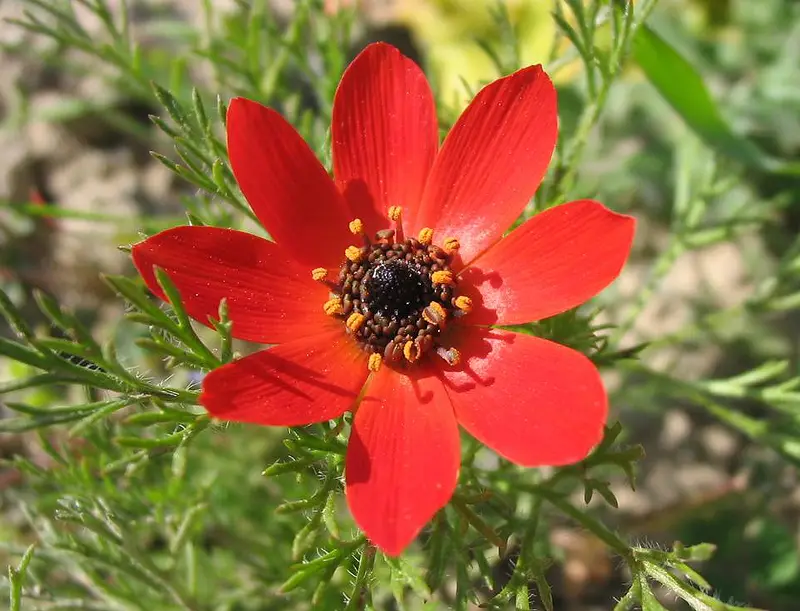
Pheasant's-eye is a slender annual of arable land, an archaeophyte introduced to Britain with early agriculture from its native Mediterranean region. It carries finely divided, feathery foliage and small but vivid cup-shaped flowers of deep crimson-scarlet, each marked with a dark centre and contrasting blackish anthers, an anemone-like bloom that gives rise to old names such as Red Morocco and blooddrops.
About
Pheasant's-eye is a slender annual of arable land, an archaeophyte introduced to Britain with early agriculture from its native Mediterranean region. It carries finely divided, feathery foliage and small but vivid cup-shaped flowers of deep crimson-scarlet, each marked with a dark centre and contrasting blackish anthers, an anemone-like bloom that gives rise to old names such as Red Morocco and blooddrops. Flowering through summer, it was once common enough on southern cornfields to be gathered and sold as a cut flower.
It grows on dry, disturbed soils over chalk and limestone, mainly in southern England, in full sun. Highly sensitive to herbicides and to the enrichment of soils by fertiliser, it suffered a catastrophic decline through the twentieth century and is now a rare, endangered arable plant of high conservation priority. It survives best where field margins and conservation headlands are managed sympathetically, and is valued in cornfield annual mixes aimed at restoring this lost arable flora.
Also known as
Pheasant's Eye · Pheasant's-eye · autumn adonis · autumn pheasant’s eye · bird's-eye
Synonyms
Adonis abortiva · Adonis aestivalis · Adonis aestivalis micrantha · Adonis annua annua · Adonis annua atrorubens · Adonis annua autumnalis · Adonis annua baetica · Adonis annua carinata · Adonis annua castellana
Beta — under active development. This catalogue is still being built and accuracy-checked. The information here (including plant identifications, British native status, soil and sun/shade preferences) is provided in good faith for general guidance only and may contain errors or omissions. It must not be relied upon on its own — please confirm details with us before making planting, specification, foraging or purchasing decisions, and never eat or medicinally use any plant based on this catalogue alone, as some species are toxic. To the extent permitted by law, Phoenix Amenity Supplies accepts no liability for any loss arising from use of this information.